


Becoming Good Ancestors in an Age of Forgetting

Venusian Womb • July 24, 2026
A blank white image.

Share this article

Who Are Our Ancestors?

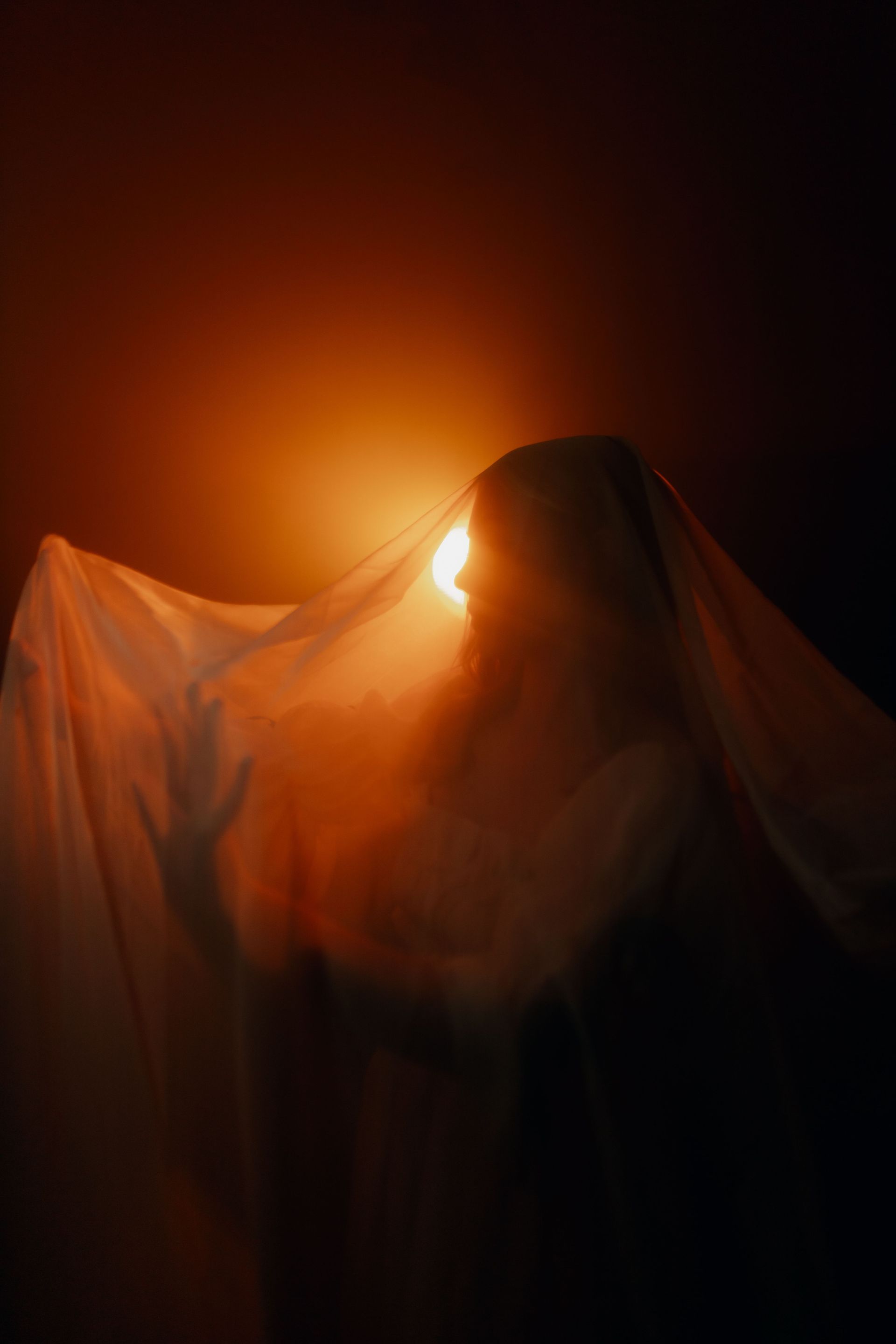
Women in sheer fabric looking into distance

What Cultural and Spiritual Colonization Actually Disrupts

Before we discuss this topic any further, it is elemental to understand what the basis of cultural and spiritual colonization means. In essence it is a rupture between people and the living inheritance of their ancestors – a severing of the stories, traditions, languages, lands, and ways of making meaning that have been carried across generations. 


Sometimes this rupture is obvious. More often, it is subtle. This can be expressed as the grandmother's recipe that was never passed down, the native language that became silenced, or family traditions not being passed to the next generation because no one had the time, or accessibility, to pass it on. Over time, these seemingly small losses accumulate, weakening the thread that connects us to those that came before us. It is a subtle form of conformity to the mainstream societal culture that dilutes ancestral wisdom that lives in you through your bloodline. When this disconnection happens, individualism replaces communal living; families scatter across cities and continents; and intergenerational living that carries living wisdom forward is lost. The result is not only a loss of tradition, but also a diminished sense of belonging to our families, our communities, and ourselves.


The Longing That Points Elsewhere

There is a deep longing some people are feeling in their being, soul, core whatever you want to call it (Schnitker, S. A., & Emmons, R. A., 2013). A longing for purpose, meaning, understanding, which may be pulling people towards appropriating various spiritual narratives, theories, practices, traditions, philosophies, rituals, which for some may be distant to their own ancestry, culture, and family lineage 


We want to create space for this much needed inquiry not as a way to shame people for spiritual or cultural appropriation, because we know shame does not serve. But as a way to highlight what this longing may actually be pointing towards? And recognizing the ways with compassion and love that you may have pulled from another culture without firstly knowing about your own.


What if this longing is pointing towards something close? A relationship with one’s own inherited culture, lineage that was never passed on, taught, available for various reasons. Potentially it was unsafe to practice or claim, colonized and severed, or simply forgotten. 

Discernment here means slowing down enough to ask: is this search bringing me closer to my own roots, or am I reaching outward because I never learned how to reach inward, toward what was actually mine?


group of people as shadows with instruments and dancing

Disruption Lives in the Body

The estrangement from our ancestry and lineage also lives in the body. As we’ve said a multitude of times before, our sense of safety, rest, and ease in part derives from our felt sense of belonging. When the body feels unsafe (for many), there is a general sense of ungroundedness, stress, anxiety, and overall restlessness.


Intergenerational trauma research has underlined how disruptive and harmful the displacement, exploitation, forced assimilation, and extraction of a community can overflow forward through generations of families. These impacts are more than devastating stories that are passed down, they are also patterns carried in the nervous system (Tujague, N., & Kelleigh, R., 2021).


The severing of ancestry and lineage lives in the present body as much as it does in our history. Many marginalized peoples carry grief their bodies deeply remember that language for some may not be equipped to account for (Currie, C. L., et al., 2019). 


The return to ancestral cultural practices for some can function as a form of healing with purpose to restore a living relationship to culture, community, identity, and traditional ways of being (Gone, J. P., 2013). 


Inheritance Is More Than Blood

Lineage is beyond blood, it is what is passed down to the next generation through your living ancestors, in the forms of stories, recipes, songs, values, and ways of giving meaning to life (through grief, celebration, transitions). It is an inheritance of the wisdom that lives in your lineage transmitted in a multitude of forms across generations. And the reality is that not everything is meant to be inherited… it is meant to be completed. Closing the loops of protective patterns that keep you confined to an ancestral karmic cycle. Lineage also includes the gifts of your ancestors that live on in you. The gifts of intuition, resilience, connection to spirit, resourcefulness, joy, prayerful living, and self-reflection are ways of being that serve cultivating for the next generation that will come after you. 


The journey of reclamation is discerning between the pattern that requires completion, and the gift that requires nurturance. An honest relationship with inheritance holds complexity and paradox: honoring your ancestors without idealizing them, carrying their gifts without carrying their unprocessed pain, choosing a path forward that is genuinely one's own rather than blind inheritance.


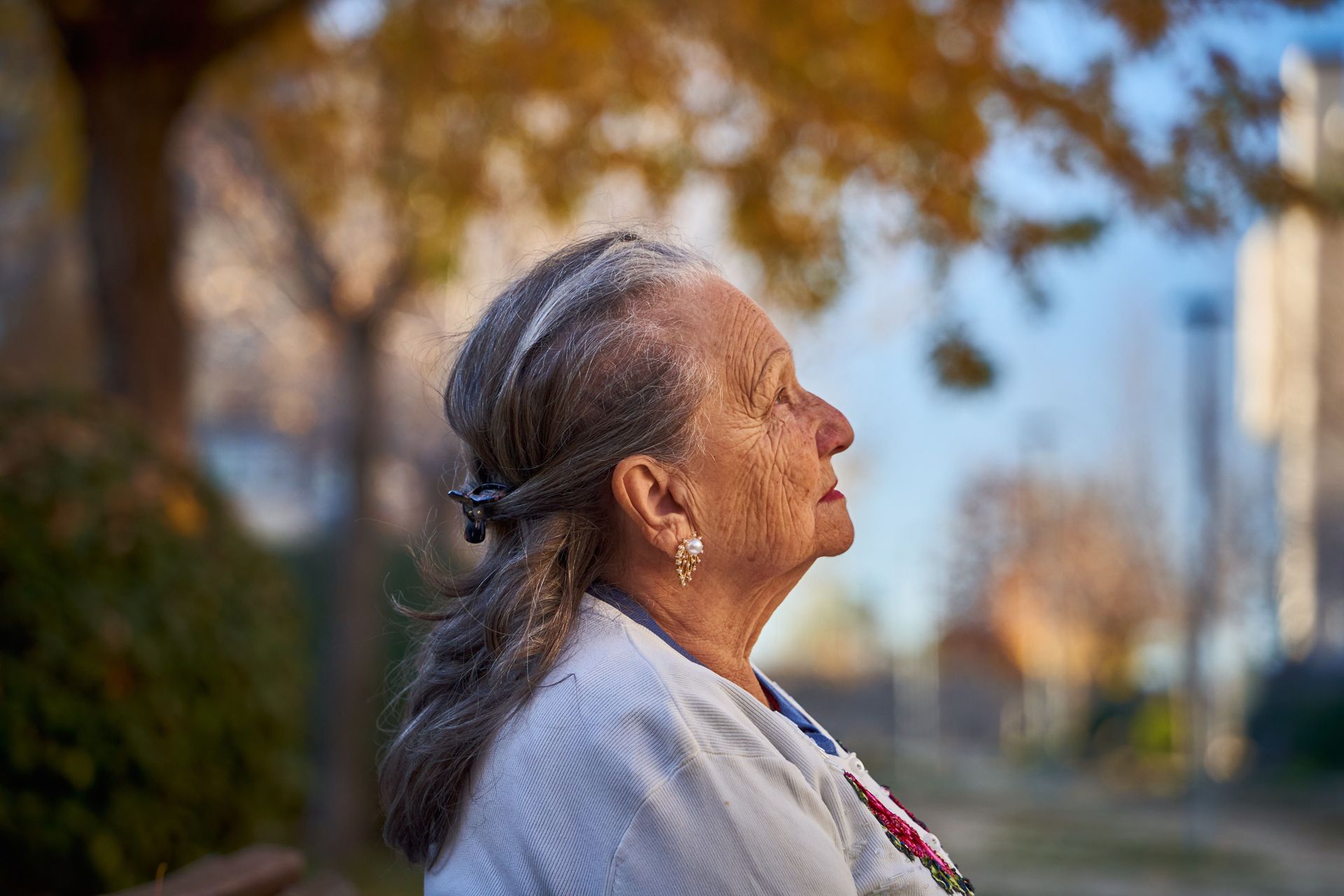
Elderly women enjoying time together.

What Reclamation Actually Looks Like

For someone whose lineage feels fragmented, painful, or complicated the process of reclamation can feel like an initiation. A lineage that has been ruptured through colonialization, migration, family rupture, or silence can lead to a dissonance of identity between learned social-cultural narratives and ancestral traditions. 


Reconnecting to your ancestral roots can look as simple as documenting a traditional family recipe, researching ancestral land, interviewing an elder, creating rituals rooted in lineage. More importantly, it is the intention to develop a relationship with your lineage through curiosity, humility, and reciprocity, while weaving ancestral wisdom as these practices become ways of remembering. It is worth pointing out the importance of discernment in the process of reclamation to come into this from a place of right reverence rather than blind imitation. 


Becoming an Ancestor

As this is a conversation about where we come from tends to have us looking backwards, it is also a conversation of remembering and recognizing that you yourself will become someone’s ancestor. 

A principle we would like to leave here as food for thought is the seventh generation principle, which is an ancient Haudenosaunee philosophy, “that the decisions we make today should result in a sustainable world seven generations into the future” (Joseph, B., 2020). 


Remembering Forward

This does not mean that everyone must return to an ancestral tradition, nor that ancestry determines what spiritual path a person should follow. It also does not erase the reality that cultures have always exchanged ideas, practices, and beliefs. But it may offer a useful question for discernment:


Is this search bringing me into a more conscious relationship with my own history and cultural location, or am I reaching outward without first asking what has been lost, interrupted, or made unavailable within my own lineage?


woman and man in meditation.

Reflection Questions

  • What stories, songs, recipes, traditions, or values were passed down to you?
  • Where do you feel most deeply rooted:  in family, community, land, creativity, or spiritual practice?
  • What have you inherited that nourishes you? What patterns end with you? What wisdom deserves to continue?
  • Imagine someone speaking your name one hundred years from now. What do you hope they thank you for?

Small Practices for This Passage

  • Interview an elder while their stories are still available to you
  • Learn and cook a family recipe, asking what memories live inside it
  • Research your ancestral land, even in small or incomplete ways
  • Create a seasonal ritual rooted in your own heritage
  • Document a story, in your own words, for someone who hasn't been born yet


Some questions that have been orbiting our field and consciousness quite prominently over the past year, for Meaghan has been knowing where she really comes from, feeling as though there has been no real culture passed down through her lineage and is feeling the missing threads of connection to her ancestry. As for Milena, born in Venezuela and raised in Canada from infancy, she grew up navigating a deep cultural dissonance and the feeling of never fully belonging to either place. Feeling like an outsider from mainstream culture and growing up in a family that was disconnected from ancestral traditions led her on a journey of ancestral reclamation.


On this journey of self-exploration we have come to understand there is a lot more unlearning to do than learning. Specifically unlearning cultural and spiritual conditioning that has majorly risen in the west over the past decade leading us to question and discern what is truly authentic to our lineage. These questions have led us to face uncomfortable truths, to reconnect with ancestral wisdom, and seek elders to learn from. 


Many humans are completely disconnected from their personal human history and lineage leaving many folks to search for identity and meaning outside of themselves through culture, religion, and practice.


And the deeper question underneath it: what happens, individually and collectively, when that rootedness is lost?


References & Further Readings

Currie, C. L., et al. (2019). The biological impacts of Indigenous residential school attendance on the next generation. Social Science & Medicine, 222, 128–136. https://doi.org/10.1016/j.ssmph.2018.100343


Gone, J. P. (2013). Redressing First Nations historical trauma: Theorizing mechanisms for indigenous culture as mental health treatment. Transcultural Psychiatry, 50(5), 683–706. https://doi.org/10.1177/1363461513487669


Joseph, B. (2020, May 30). What is the Seventh Generation Principle? Indigenous Corporate Training Inc. https://www.ictinc.ca/blog/seventh-generation-principle


Tujague, N., & Kelleigh, R. (2021). Ticking the box of “cultural safety” is not enough: Why trauma-informed practice is critical to Indigenous healing. Rural and Remote Health, 21, 6411. https://doi.org/10.22605/RRH6411


Schnitker, S. A., & Emmons, R. A. (2013). Spiritual striving and seeking the sacred: Religion as meaningful goal-directed behavior. The International Journal for the Psychology of Religion, 23(4), 315–324. https://doi.org/10.1080/10508619.2013.795822


McKenzie, J. (2022). Addressing historical trauma and healing in Indigenous language cultivation and revitalization. Annual Review of Applied Linguistics, 42, 87–99. https://doi.org/10.1017/S0267190521000167


Recent Posts

By Venusian Womb July 31, 2026
Reconnect with your ancestral roots, cultivate embodied discernment, and explore how authenticity, lineage, and legacy shape the ancestor you become.
By Venusian Womb July 10, 2026
We recently attended a women's festival where we unexpectedly found ourselves witnessing a croning ceremony. We hadn't planned to be there. We were simply walking past when the facilitator called out, "Calling all Croni Yonis... and anyone who wishes to bear witness." We looked at one another, felt goosebumps all over, and turned toward the ceremony instead of the workshop we had intended to attend. What unfolded became one of the most unforgettable moments of the weekend.

By Venusian Womb July 3, 2026
Explore how to trust yourself in uncertain times through discernment, embodiment, and staying deeply human in an age of information overload and rapid change!
Chaotic threads
By Venusian Womb June 25, 2026
Explore discernment, self-trust, and nervous system regulation in an age of information overload. How do we stay anchored in ourselves within a complex world?
By Venusian Womb May 15, 2026
Explore the Muse within, reclaim expression, embrace play, and discover how presence, creativity, and courage can transform fear into freedom.
By Venusian Womb May 1, 2026
Integration invites you to slow down, embody your experiences, and turn insight into lasting change, shifting from constant doing to conscious living.
By Venusian Womb April 17, 2026
Redefine protection as self-respect. Learn to set boundaries, clear energetic drains, and reclaim your energy so you can stay open, grounded, and fully resourced.
By Venusian Womb April 3, 2026
Unpack how distortion shapes your reality, from people-pleasing to overthinking, and learn to question your stories, drop the mask, and return to embodied truth.
By Venusian Womb March 20, 2026
Explore attunement as the foundation of nervous system regulation, and learn how to listen to your body, respond to its needs, and rebuild trust in its wisdom.
Show More