
Becoming the Crone: Aging as Initiation, Not Decline

Becoming the Crone: Aging as Initiation, Not Decline
We recently attended a women's festival where we unexpectedly found ourselves witnessing a croning ceremony.
We hadn't planned to be there.
We were simply walking past when the facilitator called out, "Calling all Croni Yonis... and anyone who wishes to bear witness."
We looked at one another, felt goosebumps all over, and turned toward the ceremony instead of the workshop we had intended to attend.
What unfolded became one of the most unforgettable moments of the weekend.
The Stories We Inherit
The stories inherited through ageism, is a very real social problem some women of the world encounter over the course of their lifetime. Ageism is a judgment towards another based on their chronological age, “too young” or “too old” to have the capacity for these things. It’s discrimination due to age.
Over the past 30 years, the field of feminist gerontology has explored how gender shapes aging through experiences and culture. In Western cultures, feminists have noted the cultural narrative that a woman’s value and beauty are a reflection of her youth (Clarke, L. H., & Griffin, M., 2008).
Women of all ages are bombarded with thousands of messages about what aging means.
"Your youth is your prime."
"You don't look your age."
"Sex is for the young."
"Your worth comes from what you contribute."
These narratives quietly teach us to associate aging with decline instead of maturation. They overlook the wisdom, discernment, and authority that naturally emerge through lived experience.
This is where the work of discernment becomes apparent:
Who benefits from women fearing this transition?
What are women being asked to believe about their bodies?
And does that belief serve... Or rather, who does that belief serve?
Sexuality, Ageism, & the Shadow we Carry
There is a huge shadow of unconscious internalized misogyny carried by many. A societal acceptance in how we talk about and disrespect half the population that has female bodies and goes through these cycles naturally (info.umkc.edu. Retrieved June 2026).
The concept that somehow sexuality only belongs to a very specific and tiny age group and anything beyond that, especially for female bodies, is not okay. Women are de-sexualized very quickly, and as soon as they get pregnant, are typically no longer regarded as sexual beings.
In today’s society, we don’t have honouring rituals or reverence for the different feminine cycles: menstruation, fertility, pregnancy, mother, perimenopause, menopause, post-menopause. These transitions are barely spoken about.
Beauty Culture, Medicalization, and the Body as Problem
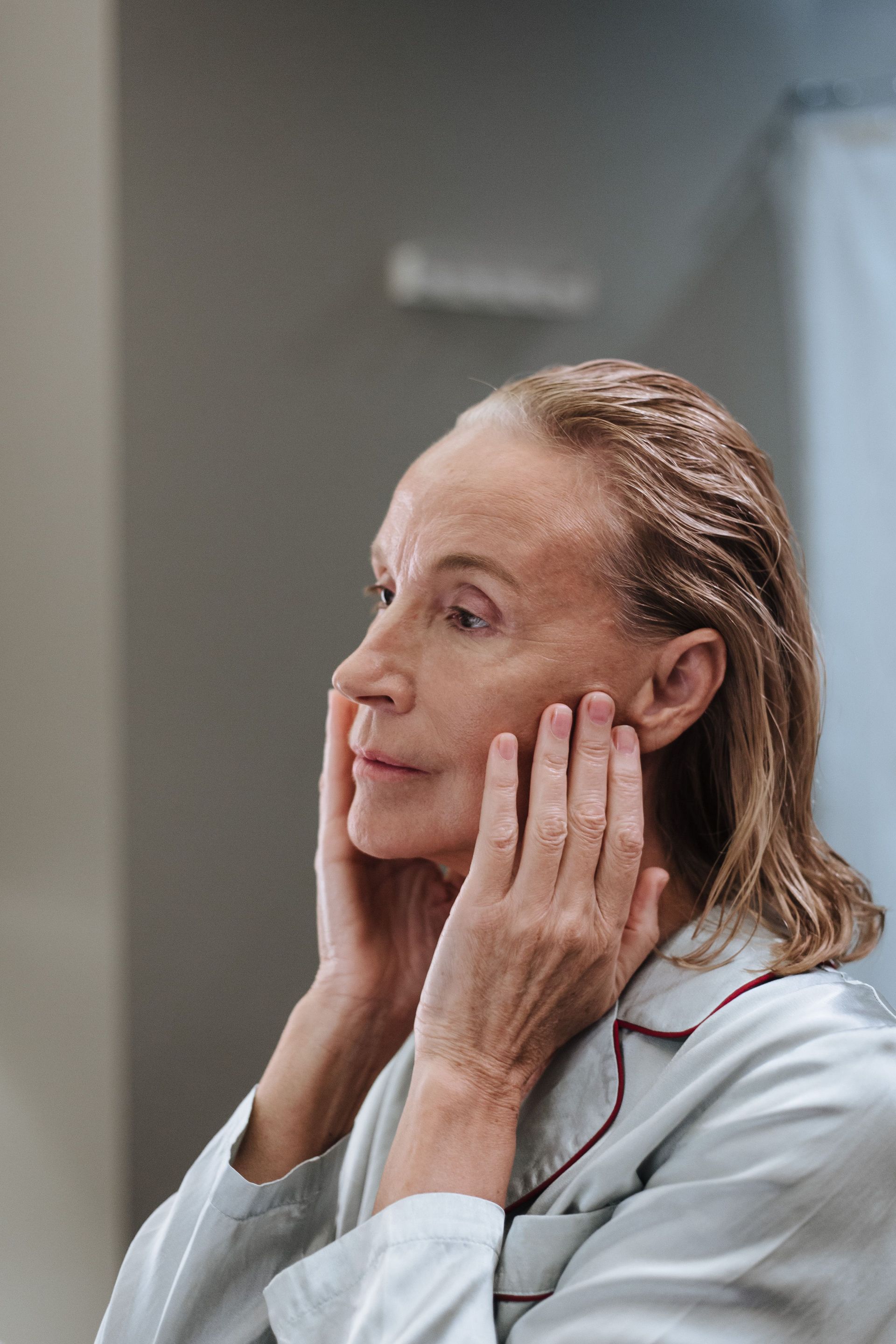
In North America, we are absolutely terrified of aging, yet many cultures speak of menopause as a second spring – a season of renewal, reinvention, and maturation with integrated life wisdom. The medicalization of women's health has given us valuable knowledge and support, but it has also shaped menopause primarily through the language of symptoms, management, and deficiency. When a woman experiences a major life transition through the lens of something that is wrong rather than as something that is changing, fear distorts her experiences, and she loses access to what the transition may be trying to teach her.
When the body is seen only as something to manage or control, we risk missing what it is trying to communicate. This is not a dismissal of Western medicine. Rather, it is an invitation to practice discernment: to ask which forms of support help us manage symptoms and which help us cultivate a relationship with the wisdom of the body itself.
What We Lost When Ritual Became Private
Across many Indigenous and ancestral cultures, menstruation, childbirth, and menopause were marked through communal rituals and collective witnessing. These were threshold moments in a woman's maturation that the community accompanied her in crossing. Modern life has moved these life transitions into clinical settings and private isolation. And while the information is more accessible now than ever, the felt sense of being accompanied by community in this transition has disappeared.
And while we have learned to normalize this way of separateness and individuality, communal support throughout life transitions is imperative. This matters because the nervous system doesn’t need more information to feel safe through transition. It needs presence and connection. A body moving through a major threshold without anyone acknowledging it is left to regulate an enormous shift entirely on its own.
Aging as Initiation
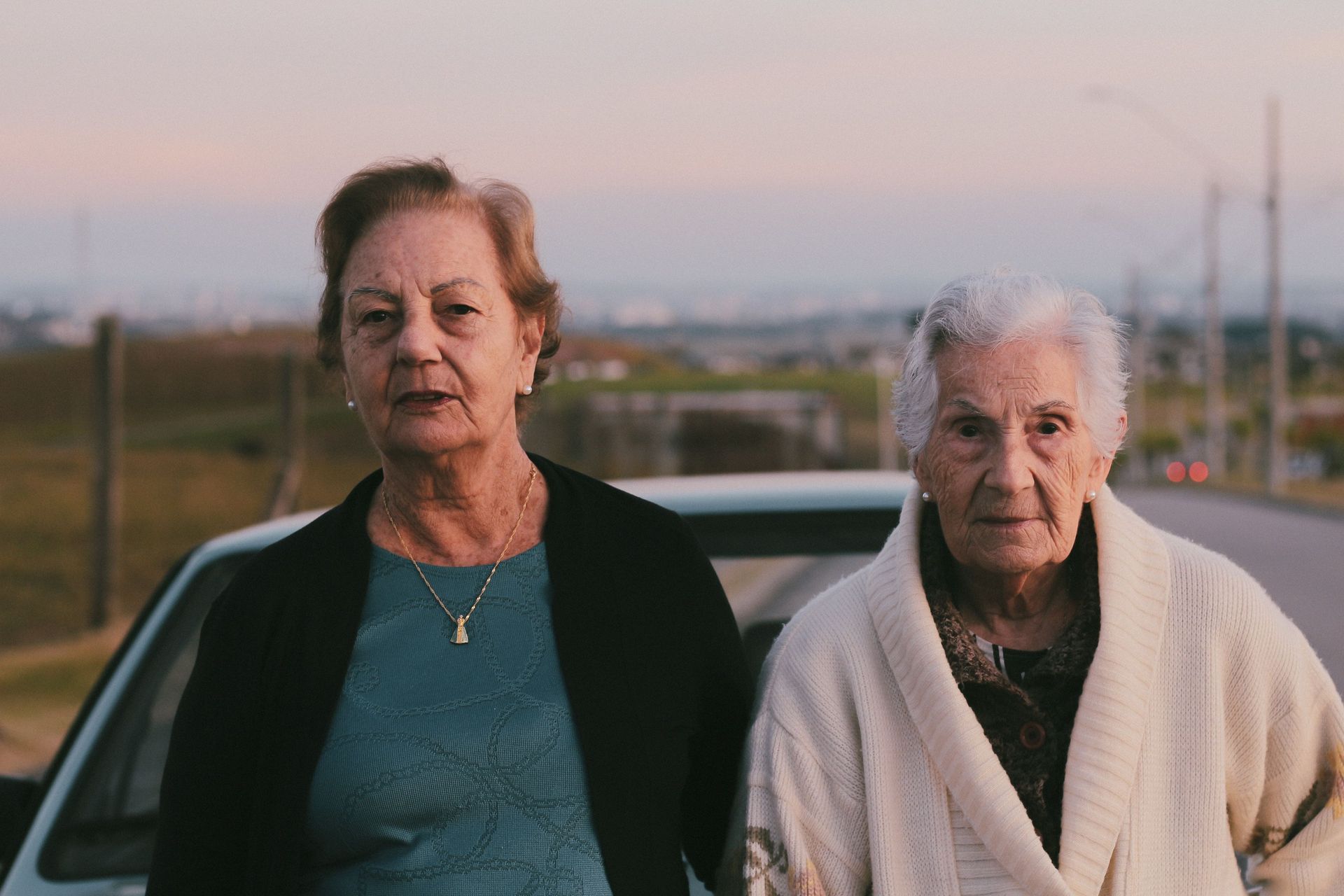
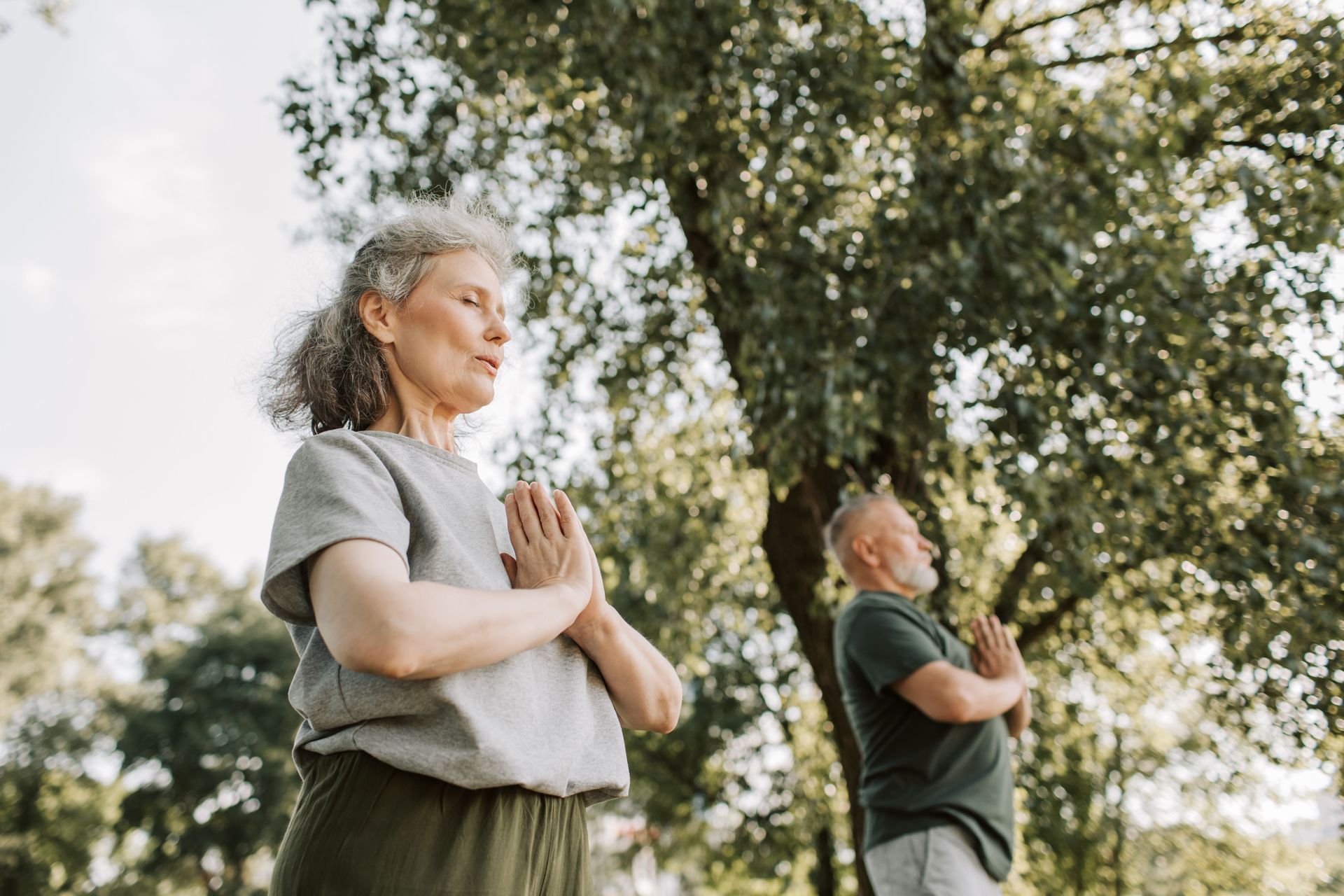
Women who are 50 + are not old; they are FULL of life! We should stop calling these women elderly and start calling them Wisdom Keepers. What if we stopped perceiving aging as a decline and honoured it as an initiation?
Initiation asks something of you, whereas a decline expects acceptance. Initiation calls you forth to release what was and emerge into a fuller form of what is; it invites grief, curiosity, and change.
When we frame aging as a decline, a loss instead of an initiation, it’s only natural that people experience this transition as a diminishment of their value as a person, which can't be further from the truth.
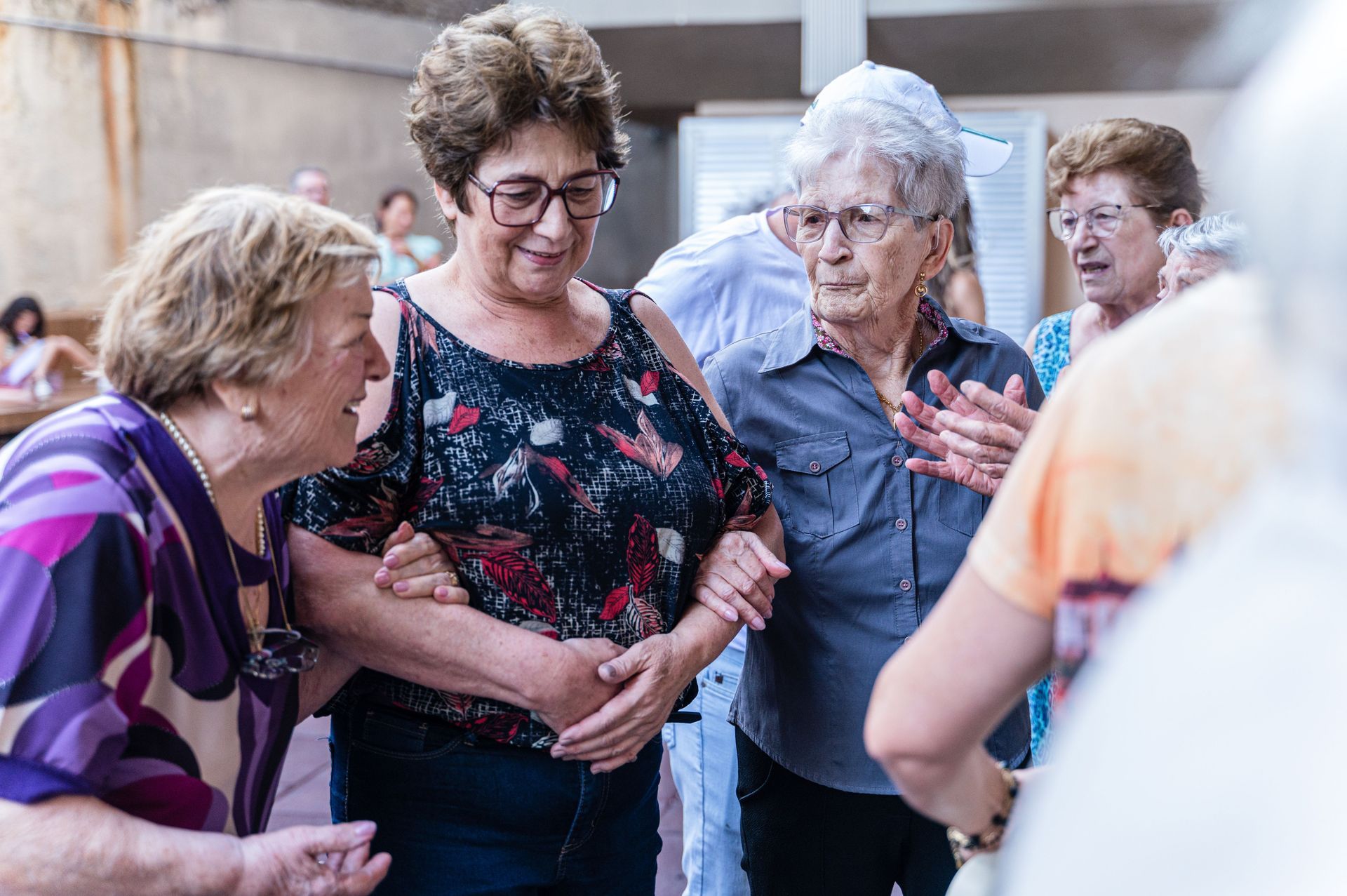
We have segregated people generationally. We all need each other to learn from each other's life experiences. Learn from the cycles of expansion and contraction, endings and beginnings we all move through. We need more levels of curiosity and enthusiasm towards one another; this helps normalize the human experience.
What the Body Knows
Grief, shame and unexpressed emotions live in the body as tension patterns, shallow breathing, and in the nervous system’s baseline state of guardedness or ease. A woman can intellectually understand that aging is natural while carrying decades of unprocessed grief in her shoulders, jaw, or pelvis.
Restoring connection and presence in the body begins with learning to recognize what disrupts it in the first place: unspoken shame, unmet grief, the chronic bracing that comes from moving through life without enough safety or witnessing. Reconciliation happens through the slower, somatic work of letting the body finally feel and complete the loop of energetic/emotional processing. Slowing down enough to listen to the body is where healing happens.
Listening to the Body as a Source of Truth
Over our lifetime, bodies accumulate a fountain of wisdom. However, women are taught to ignore their own internal compass and trust outside authorities instead. A return to initiation is an honouring of the body's wisdom. An honouring of embodied knowledge. An honouring of the body as a source of truth.
The body speaks in a handful of ways, through intuition, conditioning, and activation. With experience and the compassion to listen, our bodies' voices become clearer, and our discernment strengthens. It is a relationship that is rebuilt bit by bit, reinforcing self-trust. And aging is a crucial part of fortifying one's discernment in a relationship with one's body.
That is wisdom learned only through experience and time.
From First Blood to Beyond Blood
There are a couple of major initiations in a woman’s life: First bleed, motherhood, menopause, crone years.
We don’t believe these passages are meant to be private, hidden, or struggled through on your own. These initiations are meant to be witnessed, celebrated and honoured for the rites of passage they truly are.
A woman’s cycle is not something to be feared, managed, or fixed. It is a doorway into a more grounded version of self.
This conversation only scratches the surface of the wisdom shared by Jessie and her work. Through her offering, Beyond Blood, she guides women along the sacred continuum from menarche to menopause and elderhood, inviting a reclamation of these life passages as profound rites of initiation rather than experiences to be simply endured. If this conversation resonated with you, we encourage you to explore the beautiful work she has devoted herself to creating.
Learn more about Beyond Blood by Jessie from Lotus & Moon
Reflection Questions
- What stories about aging did you inherit, and have you ever stopped to question where they came from?
- Where in your life have you treated a bodily transition as a problem rather than a passage?
- Who witnessed your major thresholds, and who was missing?
- What would it mean to approach your own aging as an initiation rather than a decline?
Small Practices for This Passage
- Naming a transition out loud to someone you trust, simply to be witnessed
- Noticing where grief or tension lives in the body, without rushing to fix it
- Asking your body what it needs, before asking your mind what it thinks
- Marking a personal threshold with even a small ritual of your own making
- Spending time with women further along this path, and asking what they wish someone had told them
This ceremony of celebration of these women was the epitome of the weekend. It was a remembering, and a deep calling to us as maidens of the importance of rites of passage for all women, especially the women who carry lived experience in their bones. Who is celebrating them? Who is honouring their passage of menstruation to menopause? Who is listening to their stories, their wisdom?
During that experience, something crystallized within us. Transitions in womanhood are not problems to solve or experiences to endure quietly. These are rites of passage to be honoured and witnessed.
References & Further Readings
Clarke, L. H., & Griffin, M. (2008). Visible and invisible ageing: Beauty work as a response to ageism among women in mid-life and older age. Ageing & Society, 28(5), 653-674. https://doi.org/10.1017/S0144686X07007003
Levy, B. (2022). Breaking the age code: How your beliefs about aging determine how long and well you live. William Morrow.
University of Missouri-Kansas City Women's Center. (2018, November 16). Internalized misogyny: What does it look like & how do you stop it?
https://info.umkc.edu/womenc/2018/11/16/internalized-misogyny-what-does-it-look-like-how-do-you-stop-it/