

The Work Men Have Been Taught Not to Do: Healing Beyond the Patriarchy

Venusian Womb • August 21, 2026
A blank white image.

Share this article

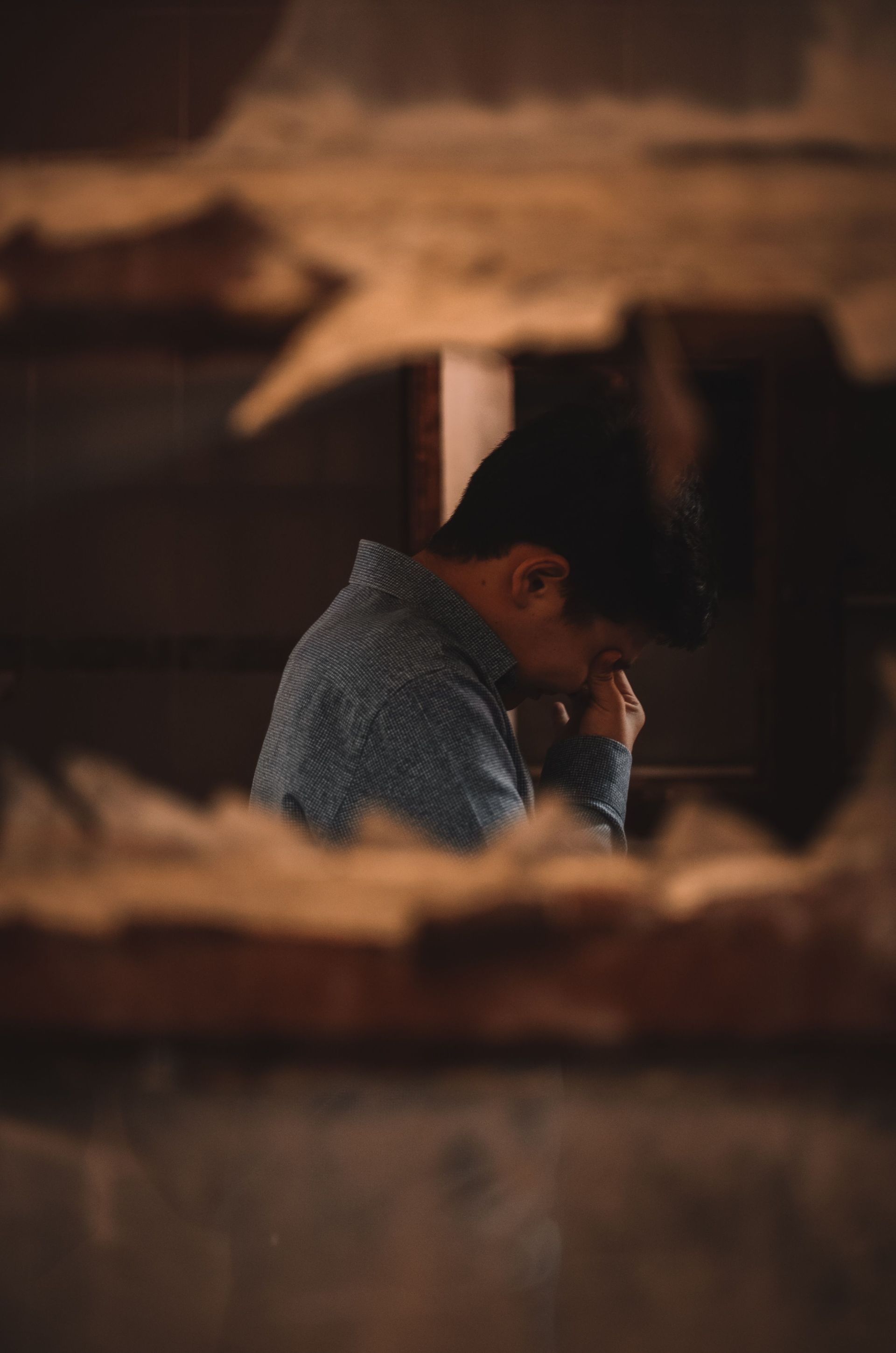
man with head in hands

The Patriarchy Does Not Love Men Either

Patriarchy places men in a position of social power, but social power and personal freedom are different things.


The dominant cultural model of masculinity has historically rewarded men for qualities such as strength, independence, dominance, competitiveness, emotional control, sexual success, and self-reliance. These qualities are not inherently negative. Courage, leadership, responsibility, and strength can all be deeply generative. The problem emerges when these qualities become rigid requirements for being considered a "real man."


Research on gender role conflict has explored this problem precisely. O'Neil (2015) describes gender role conflict as occurring when restrictive definitions of masculinity limit men's well-being and human potential. Research has linked these restrictive norms with difficulties around emotional expression, intimate relationships, mental health, and help-seeking.


The message often begins early.

Don't cry.

Don't be afraid.

Don't be too sensitive.

Don't need too much.

Don't let them see you hurt.

Be strong.

Handle it yourself.

Be the provider.

Protect everyone.

And perhaps most damaging of all:

Don't be weak.


The American Psychological Association's guidelines for working with boys and men note that boys are frequently socialized to view emotional expression as weakness, and that rigid emotional restriction can be associated with negative risk-taking, aggression, psychological distress, and reluctance to seek help (American Psychological Association, 2018).


This conditioning does not simply disappear when a boy becomes a man. It becomes a way of relating to himself:

A man may experience fear but have learned to call it anger.

He may experience grief but have learned to become productive.

He may experience loneliness but have learned to distract himself.

He may experience shame but have learned to become defensive.

He may experience tenderness but has learned to hide it.


Eventually, he may become very good at performing competence while having very little practice being emotionally known. This does not excuse harmful behaviour, but it invites us to understand the conditions that help produce it.


Women's Anger is Not the Problem

There is an important tension here. When women have experienced misogyny, coercion, violence, betrayal, or inequality, anger is a reasonable response. Anger can be protective. It can tell us that something matters. That a boundary has been crossed. That an injustice has occurred. That something needs to change.


Research has shown that women can experience an "anger gap," in which social stereotypes influence whether and how women feel able to express anger about gender inequality (van Breen & Barreto, 2023). Historically, women have also been socialized to suppress anger and prioritize relational harmony.


Research on gender and anger has demonstrated that gender role socialization influences the ways anger is experienced and expressed (Kopper & Epperson, 1996). So when women enter healing spaces and finally say, "I'm angry," we should not rush to make that anger more comfortable for everyone else. Women do not need to become compassionate toward men in order to justify their pain. But there is another possibility beyond anger or compassion.


Discernment.


We can recognize that men have participated in systems that have harmed women while also recognizing that men have themselves been shaped by those systems. We can hold a man accountable for what he has done without assuming that every man has had equal access to emotional freedom.


We can say:


"What happened to me was not okay."


And also:


"I want to understand what happened to you."


Those statements do not cancel each other out.

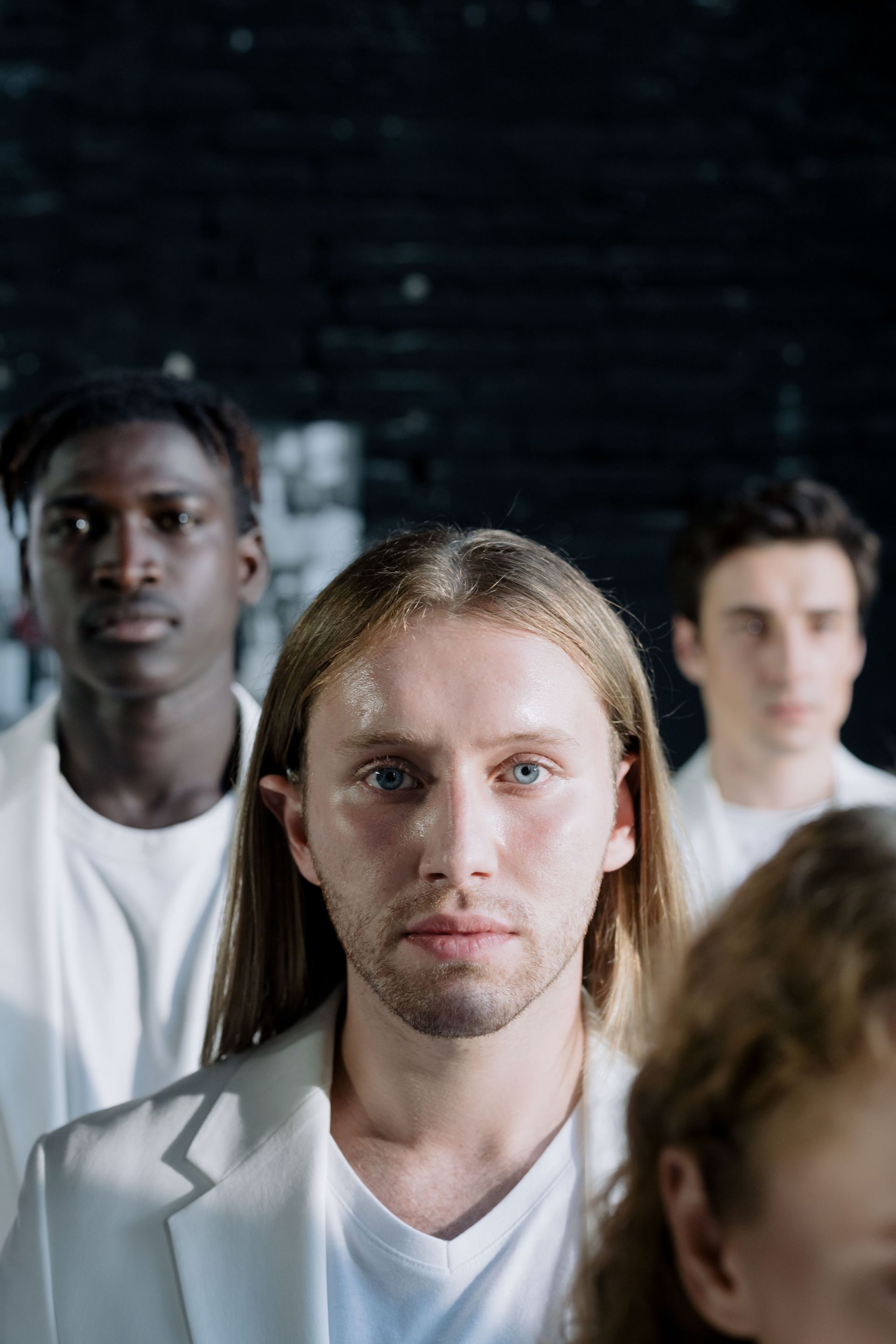
Men staring straight ahead

Men Are Not Born Emotionally Unavailable

One of the dangers of talking about "men" as though they are a monolithic category is that we can accidentally reproduce the same rigidity we are trying to dismantle.


Men are not inherently emotionally unavailable. They are not biologically incapable of vulnerability. They are not naturally less relational. Rather, people learn how to relate to emotion within particular social and cultural environments.


The research on masculinity increasingly supports understanding emotional restriction as something shaped by social norms rather than simply an inherent male characteristic. Wong et al. (2006), for example, examined men's restrictive emotionality and its associations with other emotion-related constructs and anxiety.


This matters because what is learned can also be unlearned.

A man who was taught not to cry can learn to cry.

A man taught to solve everything alone can learn to accept support.

A man who was taught to turn fear into anger can learn to recognize fear.

A man who was taught that tenderness threatens his masculinity can discover that tenderness is not weakness.


But this requires more than telling men to "open up." It requires creating environments where opening up is actually safe.

What Happens When He Finally Becomes Vulnerable

This is where the conversation gets more uncomfortable. Many women understandably want men to become more emotionally available. We want our partners to communicate. We want them to tell us what they feel. We want them to cry. We want them to process their emotions. We want them to let us see behind the armour.


And yet we might need to ask ourselves:

What happens when he actually does?


What happens when he tells you that he is scared?

That he feels inadequate?

That he does not know what to do?

That he is grieving?

That he feels rejected?

That he is overwhelmed?

That he needs you?


Sometimes we discover that we wanted vulnerability from him, but we were never taught how to hold male vulnerability. Women have often had more culturally sanctioned opportunities for intimate friendship and emotional processing with other women. Many women know what it is to sit with a friend through heartbreak, grief, confusion, anger, or shame.


Men have often had fewer spaces in which this kind of emotional intimacy is normalized. So when a man finally enters that territory, both people may be learning something new. And vulnerability becomes particularly important because it creates a kind of relational risk. When someone tells you something tender, they are giving you information that could later hurt them. That means intimacy requires stewardship.

Man shouting

When Vulnerability Becomes A Weapon

This is one of the most important distinctions in conversations about men's emotional healing.


Vulnerability isn't automatically healthy just because someone has revealed something personal. Vulnerability requires trust. If someone shares something tender with you and you later use that information to control, shame, punish, embarrass, or manipulate them, you have turned vulnerability into a liability.


Imagine a man tells his partner that he has always felt insecure about his ability to provide.

During a later argument, she says:


"No wonder you feel inadequate. You can't even provide properly."


Or he shares that he has a deep fear of abandonment.


During conflict, his partner repeatedly threatens to leave because she knows it is his deepest wound.


Or he admits that he feels sexually insecure.


Later, his partner compares him to other men or uses that insecurity to humiliate him.

Or he cries during an intimate moment.


Later, during an argument, his partner calls him weak, unstable, or "too emotional" because he cried.


Or he shares something painful about his childhood.


Months later, during a conflict, that disclosure becomes ammunition.


If a man shares vulnerability and then behaves abusively, his vulnerability does not excuse the abuse. Accountability still matters. But accountability is not humiliation. Boundaries are not punishment. And emotional intimacy cannot survive if the deepest things we reveal to one another become weapons during conflict.


Research examining men's vulnerability in couple therapy offers an important complication here. Smoliak et al. (2022) found that more emotionally expressive forms of masculinity can create opportunities for relational change, but vulnerability can also coexist with traditional power dynamics. In other words, a man becoming more emotionally expressive does not automatically mean that he has dismantled the underlying structures of domination.


We don't necessarily need more vulnerability; we need more emotionally responsible human beings.


Compassion Does Not Mean Absolution

There is a fear that compassion toward men will somehow invalidate women's experiences.


It does not have to.


Compassion does not mean saying:


"He was hurt, therefore what he did was okay."


It means being willing to understand the full human context in which behaviour occurs.


A man can have been deeply wounded by his father and still be responsible for how he treats his partner.


A man can have been taught to suppress emotion and still be responsible for learning emotional literacy.


A man can have experienced profound shame and still be responsible for the ways that shame becomes control, anger, withdrawal, or violence.


Understanding the wound does not remove responsibility for what someone does with it. In fact, real accountability may become more possible when we stop confusing shame with responsibility.


Shame says:

"I am bad."


Responsibility says:

"I did something harmful, and I need to change what I do."


Men do not need to be destroyed by shame in order to grow. And women do not need to abandon their anger in order to practice compassion.

Men May Need Different Doorways Into Healing

Perhaps one of the limitations of contemporary wellness culture is that we sometimes assume everyone needs to enter healing through the same doorway.


Many spaces for emotional healing have developed around practices that women have found deeply meaningful: talking, journaling, processing, sharing feelings, witnessing, relational reflection.


These practices can be powerful. But if a man has spent thirty years learning that emotional disclosure is dangerous, asking him to immediately "drop into vulnerability" may not be the most accessible starting point.


His doorway might be movement.

Brotherhood.

Nature.

Sport.

Breath.

Making something.

Learning to recognize sensations in his body.

Learning the difference between anger and fear.

Learning how to receive care without immediately trying to repay it.

Learning how to ask for help.

Learning how to stay present when someone else is angry.

Learning that emotional intimacy does not require abandoning strength.


This is not to say that men and women have entirely different nervous systems or that there is one correct healing method for each gender. Rather, our histories shape the doors we are willing to open to ourselves.


The question becomes:

What invitation allows this particular person to access more of their humanity?

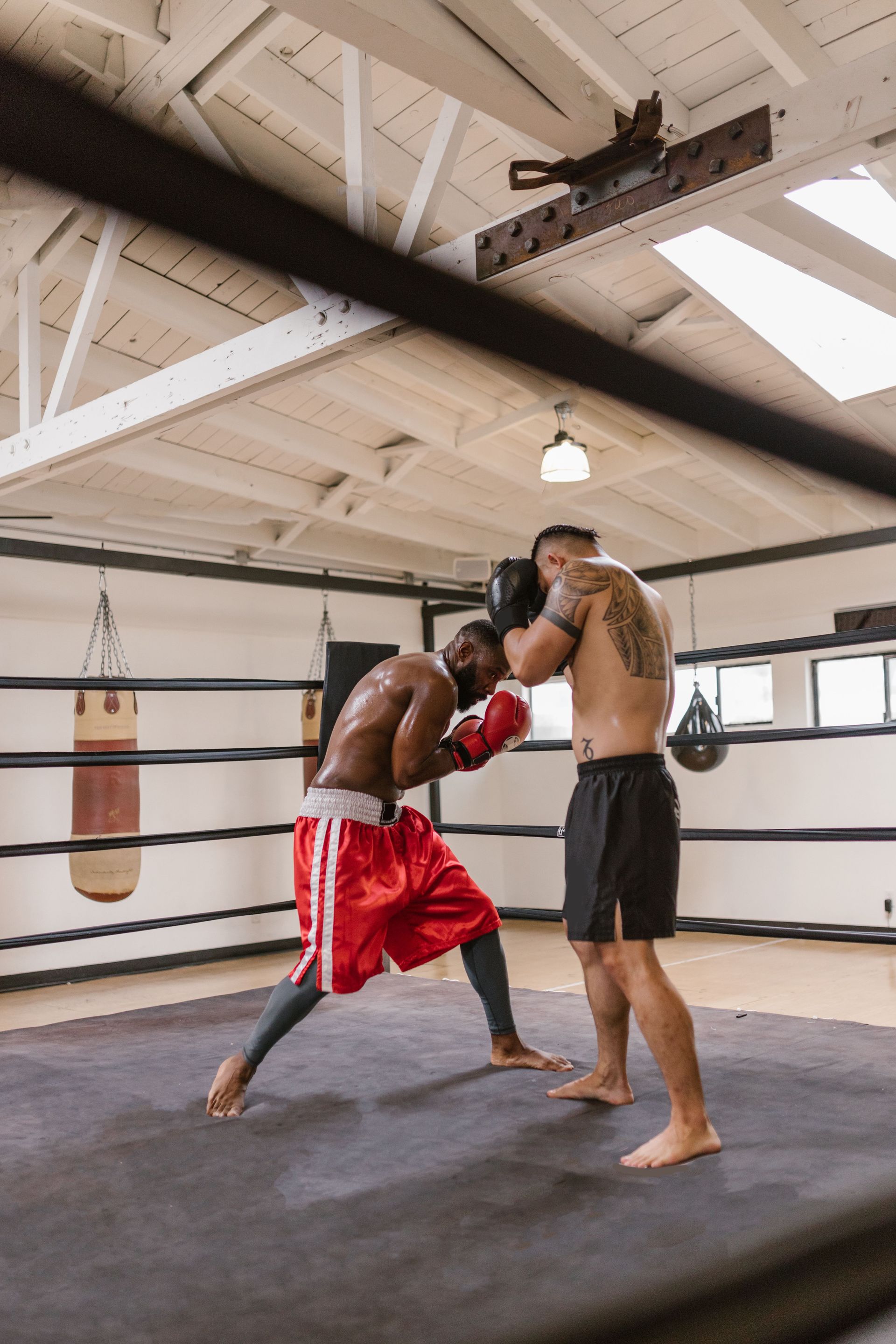
men boxing

We Need More Than "Toxic Masculinity"

Mindfulness of the language we use is important.


The term "toxic masculinity" can be useful when describing destructive norms such as domination, misogyny, emotional suppression, aggression, or entitlement.


But if men hear the message as "masculinity itself is toxic," we should not be surprised when they become defensive.


There are forms of masculinity that are deeply life-giving.

Courage.

Protection.

Devotion.

Leadership.

Strength.

Discipline.

Brotherhood.

Responsibility.


The work is not necessarily to erase masculinity. It is to liberate masculinity from the belief that men must sacrifice their humanity in order to embody it.


The APA's broader work on men and masculinities emphasizes this complexity. Masculinity is not one fixed experience, and masculine traits such as courage, compassion, leadership, and assertiveness can be psychologically healthy, while rigid adherence to particular norms can become harmful (American Psychological Association, 2018).


How do we make it possible for men to be fully human?

A particular kind of “healing” space has become increasingly visible over the last decade. Women gather in circles. We speak about our bodies, our anger, our sexuality, our mothers, our sisters, our boundaries, our grief. We learn to name what we have experienced and to reclaim parts of ourselves that we were taught to suppress. This work is necessary.


Women have spent generations being asked to make themselves smaller, quieter, more accommodating, more agreeable. We have been taught to tend to everyone else's emotions while abandoning our own. We have been told that our anger is irrational, our intuition is dramatic, our sexuality is dangerous, and our boundaries are selfish.


So yes, women deserve spaces where they can be angry. But there is a very important question worth asking:


What happens when we create spaces for women's healing without creating equally intentional spaces for men to heal from the same system?


Because patriarchy does not only harm women. It harms men too. And acknowledging that does not require us to minimize the ways women have been harmed by men. It requires us to hold more than one truth at a time.


Healing Cannot Become Another Gender Competition

There is a temptation, particularly when discussing gender, to ask:


Who has it worse?

Who deserves more compassion?

Whose pain matters more?


But healing does not require us to rank suffering.

Women can say:


"Men have harmed me, and I am angry."


Men can say:

"I was taught to suppress myself, and I am hurting."


Both can be true.


We can acknowledge that men continue to hold forms of structural and interpersonal power while also acknowledging that many men are suffering within restrictive expectations of masculinity.


We can challenge male violence without reducing men to violent beings.

We can validate women's anger without making compassion impossible.


We can invite men into vulnerability without making women responsible for holding them.

And we can ask men to take responsibility for their healing without shaming them for needing healing in the first place.


This may be part of what it means to move beyond the patriarchy. Together we need to create a culture in which all of us become more capable of being human with one another. Because the opposite of patriarchy is not necessarily a world where one gender finally learns to hold all the power. From our perception, it is a world where power no longer requires disconnection.


Where strength does not require emotional numbness.

Where vulnerability does not mean surrendering dignity.

Where anger can be information rather than destruction.

Where accountability can exist without humiliation.

Where compassion does not require self-abandonment.

And where intimacy means that what we reveal to one another is not ammunition but something we learn how to hold.


References

American Psychological Association. (2018). APA guidelines for the psychological practice with boys and men. American Psychological Association.


American Psychological Association. (2020, January 27). Strict adherence to traditional masculinity associated with more severe PTSD in vets. American Psychological Association


Kopper, B. A., & Epperson, D. L. (1996). The experience and expression of anger: Relationships with gender, gender role socialization, depression, and mental health functioning. Journal of Counseling Psychology, 43(2), 158–165. https://doi.org/10.1037/0022-0167.43.2.158


O'Neil, J. M. (2015). Men's gender role conflict: Psychological costs, consequences, and an agenda for change. American Psychological Association.


Smoliak, O., et al. (2022). The politics of vulnerable masculinity in couple therapy. Journal of Marital and Family Therapy, 48(2), 427–446. https://doi.org/10.1111/jmft.12530


van Breen, J. A., & Barreto, M. (2023). Mind the gap! Stereotype exposure discourages women from expressing the anger they feel about gender inequality. Emotion, 23(1), 124–137. https://doi.org/10.1037/emo0000810


Wong, Y. J., Pituch, K. A., & Rochlen, A. B. (2006). Men's restrictive emotionality: An investigation of associations with other emotion-related constructs, anxiety, and underlying dimensions. Psychology of Men & Masculinity, 7(2), 113–126. https://doi.org/10.1037/1524-9220.7.2.113


Wong, Y. J., Ho, M.-H. R., Wang, S.-Y., & Miller, I. S. K. (2017). Meta-analyses of the relationship between conformity to masculine norms and mental health-related outcomes. Journal of Counseling Psychology, 64(1), 80–93. https://doi.org/10.1037/cou0000176


Recent Posts

By Venusian Womb September 3, 2026
What Does Holistic Health Actually Mean?
By Venusian Womb August 28, 2026
Explore men’s mental health, nervous system regulation, masculine and feminine energy, and how deeper understanding can transform relationships and connection.

By Venusian Womb August 14, 2026
Explore dreams as a space for self-discovery, creativity, and discernment. Learn to remember, embody, and engage with your dreams as a practice of self-trust.

August 7, 2026
Explore why we dream, what dreams reveal about our inner worlds, and how dreaming can teach us to discern emotional, symbolic, and factual truth.
By Venusian Womb July 31, 2026
Reconnect with your ancestral roots, cultivate embodied discernment, and explore how authenticity, lineage, and legacy shape the ancestor you become.

By Venusian Womb July 24, 2026
Exploring ancestral disconnection, cultural reclamation, spiritual discernment, and what it means to become good ancestors.

By Venusian Womb July 10, 2026
We recently attended a women's festival where we unexpectedly found ourselves witnessing a croning ceremony. We hadn't planned to be there. We were simply walking past when the facilitator called out, "Calling all Croni Yonis... and anyone who wishes to bear witness." We looked at one another, felt goosebumps all over, and turned toward the ceremony instead of the workshop we had intended to attend. What unfolded became one of the most unforgettable moments of the weekend.
By Venusian Womb July 3, 2026
Explore how to trust yourself in uncertain times through discernment, embodiment, and staying deeply human in an age of information overload and rapid change!
Chaotic threads
By Venusian Womb June 25, 2026
Explore discernment, self-trust, and nervous system regulation in an age of information overload. How do we stay anchored in ourselves within a complex world?
Show More