



Dreaming Reality: Why We Spend Nearly a Third of Our Lives in a World We Rarely Explore

August 7, 2026
A blank white image.

Share this article

"Dreams are today's answers to tomorrow's questions." -  Carl Jung

Women in sheer fabric looking into distance

We All Dream

One of the biggest misconceptions about dreaming is that some people simply don't dream. Research shows that healthy adults typically experience four to six dreaming periods every night, primarily during REM sleep, though dreams also occur during non-REM sleep.


Most people forget the majority of their dreams shortly after waking (Nir & Tononi, 2010). Unless a dream is consciously recalled or recorded, as much as 95% of dream content may vanish within minutes (Walker, 2017).


People often ask one another: Do you dream?

The better question is: Do you remember your dreams?


Across an average lifetime, we may spend approximately six years actively dreaming (Walker, 2017). Six years inhabiting an internal world most of us receive almost no education about.

A Third of Our Lives Is Spent Sleeping

If the average person lives around 75 years, approximately 25 of those years will be spent asleep (Walker, 2017). That means roughly a third of our lives occur outside ordinary waking consciousness. Imagine dedicating a third of your education to mathematics, music, or medicine. And now imagine receiving almost no guidance for a domain that occupies that same proportion of your life.


Sleep science has expanded dramatically over recent decades, revealing that sleep supports memory consolidation, emotional regulation, learning, immune function, creativity, and brain health (Walker, 2017). Dreaming appears woven into many of these processes. Rather than random mental noise, dreams increasingly look like ongoing emotional processing, memory integration, and creative recombination (Nir & Tononi, 2010).

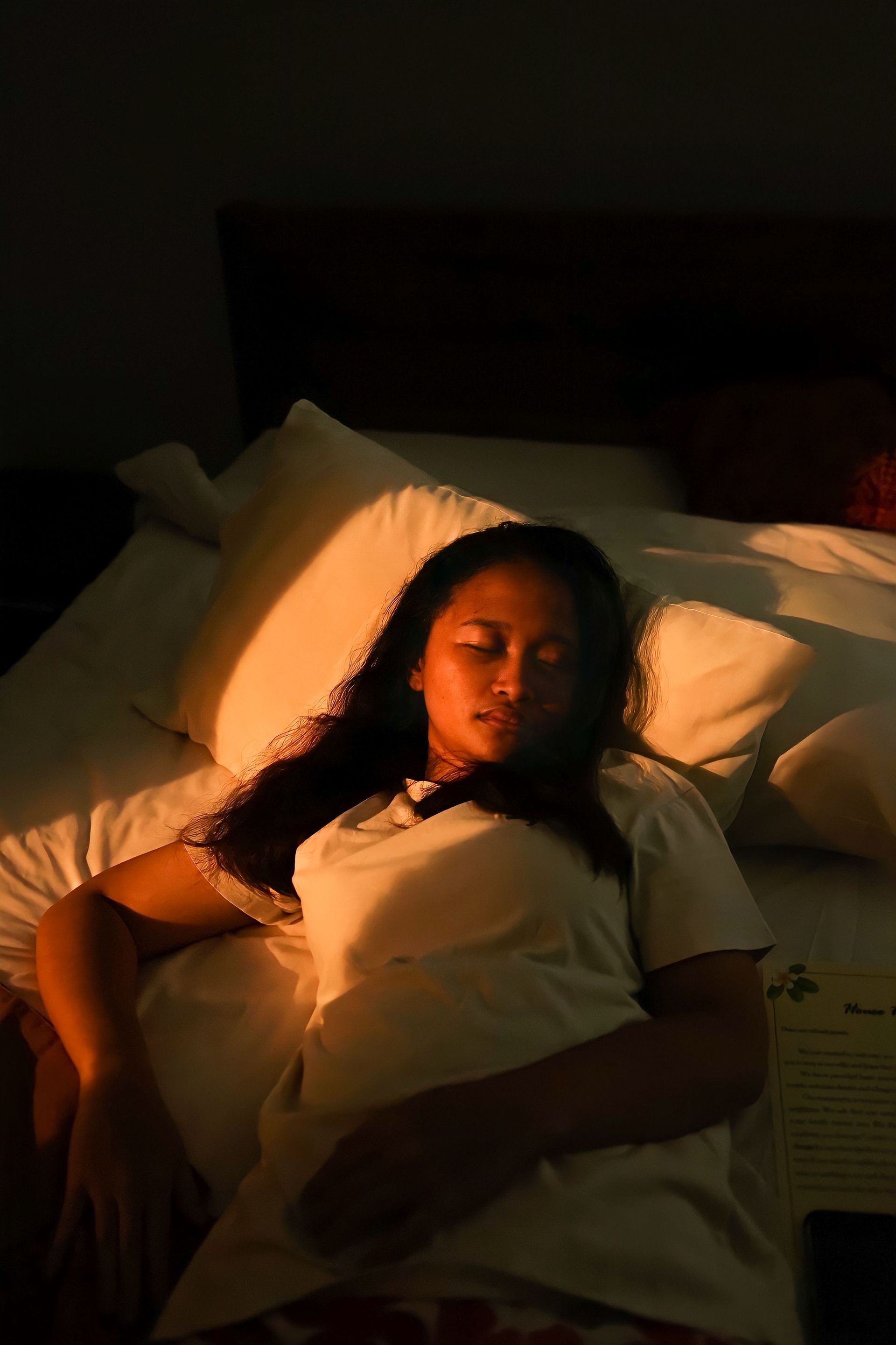
Women Sleeping while light shines on her face

Dreams Have Shaped Human Civilization

Despite centuries of inquiry, neuroscience hasn't identified a single function of dreaming; instead, several complementary theories have emerged. Some researchers suggest dreams help consolidate memories by integrating new information into existing neural networks. Finnish neuroscientist Antti Revonsuo proposed the Threat Simulation Theory, suggesting dreams evolved as a safe space to rehearse responses to danger (Revonsuo, 2000). Others argue dreams help regulate emotion by processing unresolved experience in ways unavailable to waking consciousness.


Creativity researcher Deirdre Barrett has documented artists, scientists, engineers, and mathematicians solving problems through dreams, suggesting dreaming facilitates novel associations and creative insight (Barrett, 2001).


Rather than competing, these theories likely describe different facets of one remarkably complex process.

Carl Jung Changed the Conversation

Few modern thinkers shaped contemporary dream psychology more than Carl Jung. While Freud viewed dreams primarily as disguised wish fulfillment, Jung proposed that dreams communicate from the unconscious, often compensating for imbalances in conscious life (Jung, 1964).


Rather than asking, "What does this symbol always mean?" Jung encouraged asking, "What does this symbol mean for this individual, at this moment in their life?" He introduced the concept of archetypes, universal symbolic patterns appearing across myths, religions, and dreams throughout human history (Jung, 1968).


Though contemporary psychology doesn't universally adopt Jung's framework, modern dream research continues to recognize dreams as reflecting emotional concerns, identity development, and ongoing psychological adaptation (Domhoff, 2018).

Woman resting head on table

We Dream While Awake, Too

Dreaming isn't limited to sleep. Throughout the day we imagine conversations, rehearse future possibilities, revisit memories, and mentally simulate scenarios. Neuroscientists associate many of these internally directed processes with the Default Mode Network, a large-scale brain network active during self-reflection, autobiographical memory, imagination, and future planning (Raichle et al., 2001).


Psychologist Jerome Singer, a pioneer of daydream research, argued that constructive daydreaming plays an important role in creativity, planning, empathy, and emotional well-being (Singer, 1966). Rather than distractions, imagination and daydreaming appear to be fundamental capacities that help humans make meaning and envision futures before they exist.

The Dreams That Shape Reality

Before every invention existed, someone imagined it. Before every movement transformed society, someone envisioned another possibility. Before every piece of music, every work of art, every scientific discovery, there was an idea that did not yet exist.


Creation begins internally before it becomes externally visible. This was the heart of our first podcast season: gestation. Dreams, whether experienced in sleep or imagination, often represent the earliest stages of creation. Not every dream is meant to become reality, but every reality first existed as someone's dream.

Can We Trust our Dreams?

If dreams are meaningful, an important question follows: can we trust them? The answer depends on what we mean by trust.


A dream can feel profoundly true without being literally true. You may dream of losing someone you love (that doesn't necessarily predict their death. You may dream of a flood; that doesn't mean one is coming. But both dreams may reveal something emotionally or psychologically significant: grief, change, fear, or the feeling of being overwhelmed.


Psychologists have long cautioned against universal dream dictionaries that assign fixed meanings to symbols. Jung argued that a dream's meaning can't be separated from the life of the dreamer; a snake might symbolize healing for one person and fear for another, depending on lived experience. G. William Domhoff echoes this: dreams are shaped by our personal concerns and waking lives, not universal symbolic codes (Domhoff, 2018).


Rather than asking, "What does this dream mean?" perhaps a more fruitful question is: "What is this dream inviting me to become curious about?"

Dreams aren't infallible maps. They're conversations. Sometimes they reveal emotions we haven't yet acknowledged. Sometimes they weave fragments of memory together in surprising ways. Sometimes they inspire creative insight. And sometimes they're simply strange.


Discernment doesn't require us to dismiss dreams because they can't be objectively verified, nor to accept every dream as prophecy. Instead, it invites us to hold dreams with openness and humility to listen, stay curious, notice patterns over time, and ground our interpretations in reflection and, when appropriate, evidence.


In many ways, dreams become a practice for the larger question guiding this season: how do we remain open to mystery without abandoning critical thinking?


Perhaps the invitation isn't to decide whether dreams are "true" or "false," but to ask a deeper question: what kind of truth might this dream be pointing toward? It may not be a factual or predictive truth, but it could be an emotional truth, a symbolic truth, a relational truth, or an invitation toward a future we haven't yet imagined.

Bed on top of a purple staircase

A Conversation Worth Having Again

Modern culture has become remarkably sophisticated at studying the external world. We map genomes, build artificial intelligence, explore distant galaxies, analyze massive datasets. Yet many of us have lost fluency in exploring our own inner worlds.


Perhaps dreams aren't asking us to abandon science for mysticism. Perhaps they invite something richer — a conversation between neuroscience and symbolism, between evidence and experience, between the measurable and the meaningful. That is precisely the conversation we hope to explore as Season Two unfolds.


Next week, we're joined by dreamworker and soul guide Natasha, whose work explores dreams, liminality, imagination, and the creative edge where inner life begins shaping outer reality.


Until then, we invite you to begin with a simple question: when was the last time you truly listened to your dreams?

Small Practices for This Passage

  • Ask "what," not "what does it mean." Instead of hunting for a fixed symbol dictionary, ask: What feeling did this leave me with? What in my life feels similar right now? This mirrors the Jungian move from universal symbols to personal context.
  • Track patterns over weeks, not nights. A single dream rarely means much on its own. A recurring image or emotion across several weeks is more worth sitting with.
  • Separate the feeling from the forecast. If a dream unsettles you, name the emotion it left (grief, overwhelm, longing) without treating it as a literal prediction.

Each night when we close our eyes we enter another world, whether you remember it or not. In the dream world, time and space behave differently than in our waking states. They are packed with symbolic meaning, environments and landscapes that seem impossible but completely ordinary. Our memories, emotions, desires, and fears are interconnected in unique and unimaginable ways our conscious mind couldn’t possibly imagine.

When morning comes and most of us dismiss what happened within minutes. We check our phones, shower, and make coffee. Begin another day oriented almost entirely toward external reality.


At Venusian Womb, this question raises an intriguing  question. If human beings spend roughly one-third of their lives asleep, and much of that sleep includes dreaming, why have so many of us been taught that dreams are insignificant?


Season One of our podcast explored gestation. We asked what it means to carry a dream before it becomes visible. We explored imagination, creativity, desire, possibility, and the unseen processes that precede birth.


Now, in Season Two, we are asking a different question.

Learning to trust yourself, question yourself, and how to discern the difference. 


In this week’s blog post we are exploring dreaming, because dreaming may be one of humanity's oldest forms of inquiry into reality itself.

References & Further Readings

  • Barrett, D. (2001). The Committee of Sleep: How Artists, Scientists, and Athletes Use Dreams for Creative Problem Solving. Domhoff, G. W. (2018). The Emergence of Dreaming.
  • Jung, C. G. (1964). Man and His Symbols. Nir, Y., & Tononi, G. (2010). Dreaming and the brain. Cold Spring Harbor Perspectives in Biology, 2(1).
  • Raichle, M. E., et al. (2001). A default mode of brain function. PNAS, 98(2).
  • Revonsuo, A. (2000). The reinterpretation of dreams: An evolutionary hypothesis of the function of dreaming. Behavioral and Brain Sciences, 23(6), 877–901.
  • Singer, J. L. (1966). Daydreaming: An Introduction to the Experimental Study of Inner Experience.
  • Stanner, W. E. H. (1956). The Dreaming. In Australian Signpost.
  • Walker, M. (2017). Why We Sleep: Unlocking the Power of Sleep and Dreams.

Recent Posts

By Venusian Womb September 3, 2026
What Does Holistic Health Actually Mean?
By Venusian Womb August 28, 2026
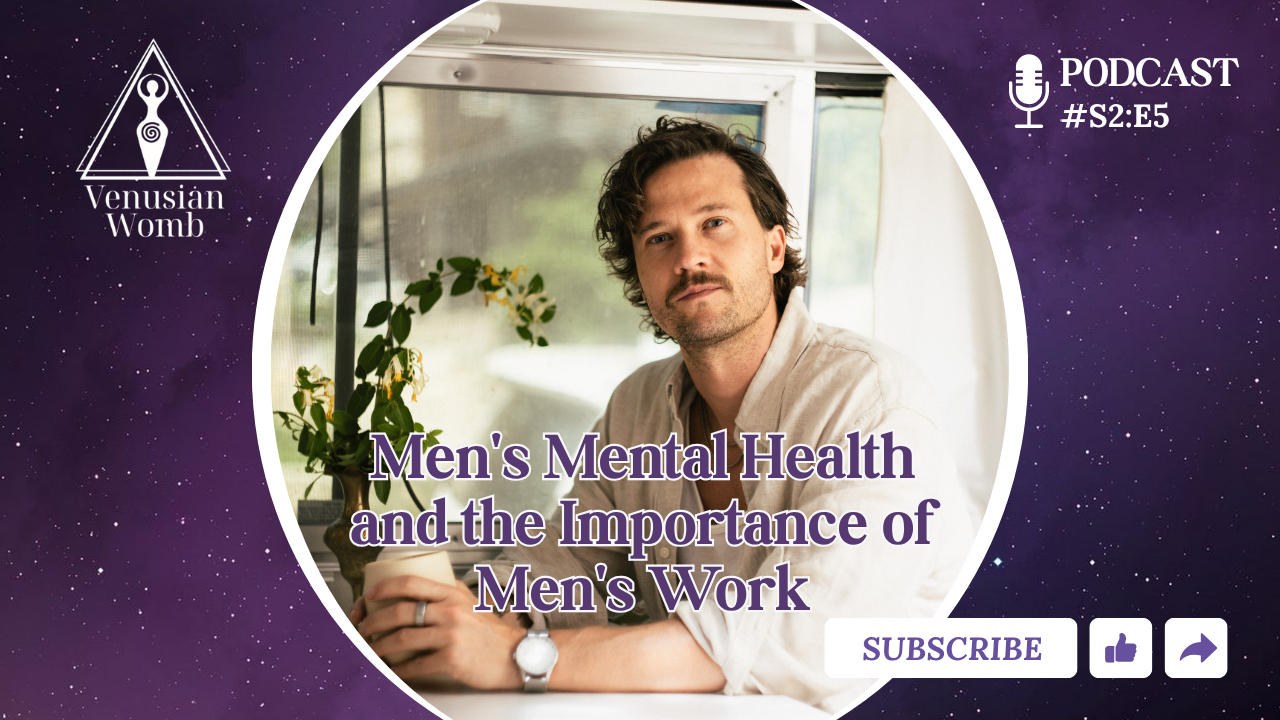
Explore men’s mental health, nervous system regulation, masculine and feminine energy, and how deeper understanding can transform relationships and connection.

By Venusian Womb August 21, 2026
How patriarchy harms men and women, and why masculine vulnerability, compassion, and accountability matter in healing.
By Venusian Womb August 14, 2026
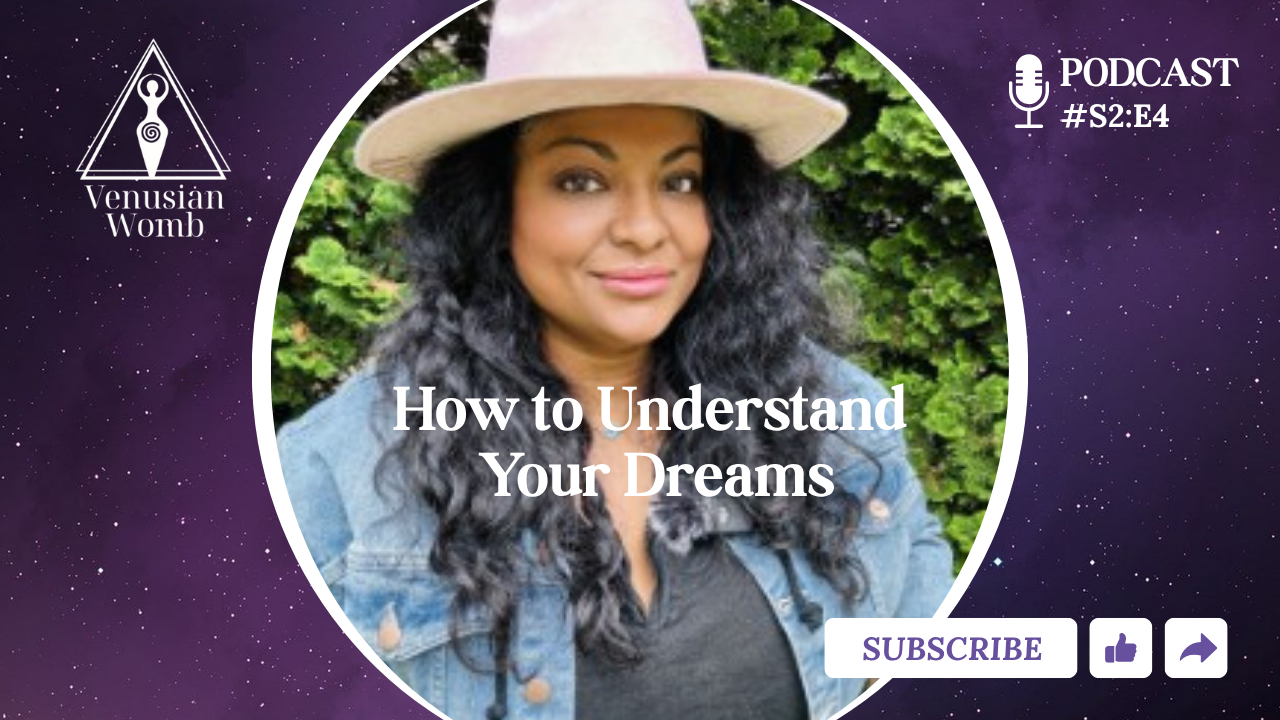
Explore dreams as a space for self-discovery, creativity, and discernment. Learn to remember, embody, and engage with your dreams as a practice of self-trust.
By Venusian Womb July 31, 2026
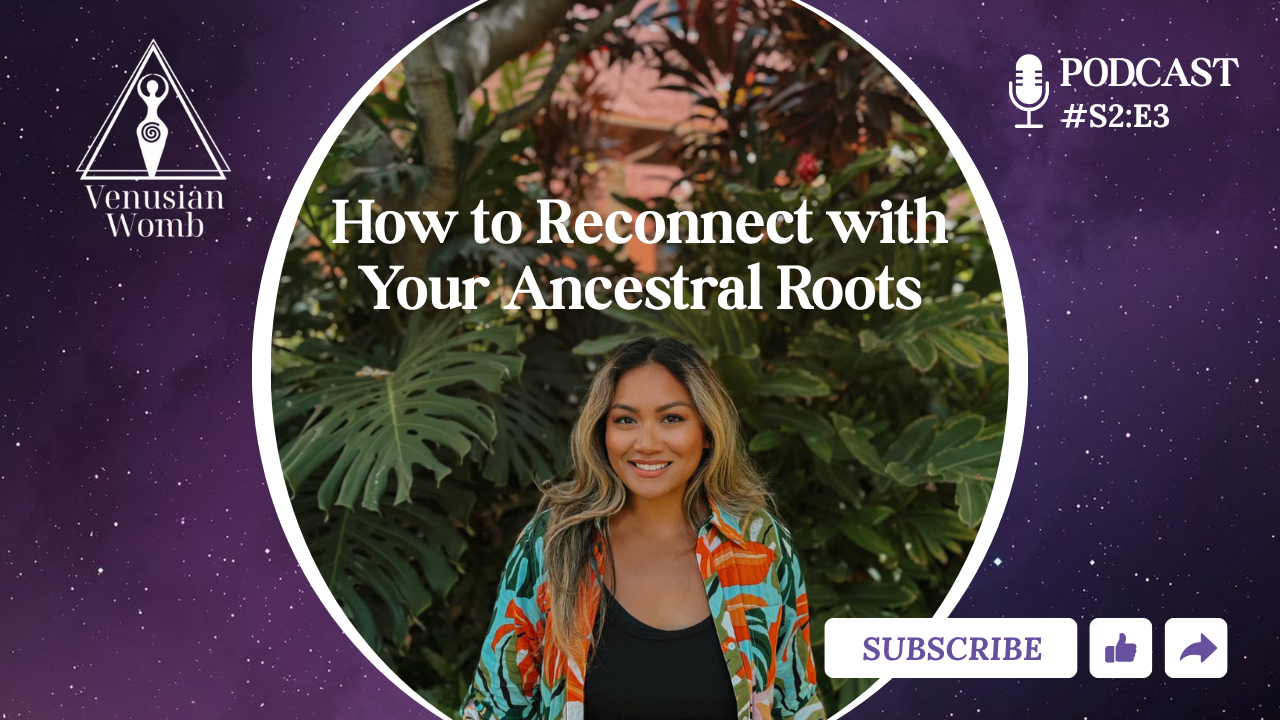
Reconnect with your ancestral roots, cultivate embodied discernment, and explore how authenticity, lineage, and legacy shape the ancestor you become.
By Venusian Womb July 24, 2026
Exploring ancestral disconnection, cultural reclamation, spiritual discernment, and what it means to become good ancestors.

By Venusian Womb July 10, 2026
We recently attended a women's festival where we unexpectedly found ourselves witnessing a croning ceremony. We hadn't planned to be there. We were simply walking past when the facilitator called out, "Calling all Croni Yonis... and anyone who wishes to bear witness." We looked at one another, felt goosebumps all over, and turned toward the ceremony instead of the workshop we had intended to attend. What unfolded became one of the most unforgettable moments of the weekend.
By Venusian Womb July 3, 2026
Explore how to trust yourself in uncertain times through discernment, embodiment, and staying deeply human in an age of information overload and rapid change!
Chaotic threads
By Venusian Womb June 25, 2026
Explore discernment, self-trust, and nervous system regulation in an age of information overload. How do we stay anchored in ourselves within a complex world?
Show More