Deepening Your Health Journey: A Practice of Embodied Discernment


What Does Holistic Health Actually Mean?
Holistic health is sometimes associated with alternative therapies, but at its simplest, the word holistic means considering the whole person.
Our bodies do not experience nutrition separately from sleep.
Sleep does not exist separately from stress.
Stress is affected by our relationships.
Our relationships can influence our behaviours.
Our environment can influence how much we move, what foods we have access to, how much light we receive, how safe we feel, and whether rest is available to us. Physical, psychological, social, and environmental health are continually interacting. This is why supporting health rarely comes down to one perfect habit. It is usually the cumulative result of many seemingly ordinary things repeated over time.
A nourishing meal matters. So does a walk. So does sleeping enough. So does having somebody to call when life becomes difficult. So does having moments when your mind is not receiving another notification, opinion, advertisement, or demand.
Holistic health is the recognition that all of these things belong in the conversation.
Nourishment: Building a Balanced Relationship With Food
Nutrition is one of the foundations of health, but it is also an area where conflicting information can make people feel especially confused.
What constitutes a balanced diet varies according to age, activity level, health status, culture, access to food, and individual needs. However, some foundational principles are remarkably consistent.
The World Health Organization describes a healthy diet through four broad principles: adequacy, balance, moderation, and diversity. It emphasizes a wide variety of nutrient-dense foods, including vegetables, fruit, legumes, whole grains, nuts, seeds, and appropriate sources of protein, while limiting excessive free sugars, sodium, and unhealthy fats.[2]
For most people, this means building meals around foods that provide the body with protein, carbohydrates, fats, fibre, vitamins, minerals, and sufficient energy.
Rather than becoming fixated on whether one ingredient is inherently “good” or “bad,” it can be more helpful to look at the overall pattern. These questions create more supportive awareness compared to rigid food rules:
- Are you eating a diversity of foods?
- Are you consuming enough fibre?
- Are there plants on your plate regularly?
- Are you getting adequate protein?
- Are you eating enough for the demands you place on your body?
- Are most of your meals actually nourishing you, or are they primarily helping you get through the day?
Looking Beyond "Healthy" Marketing
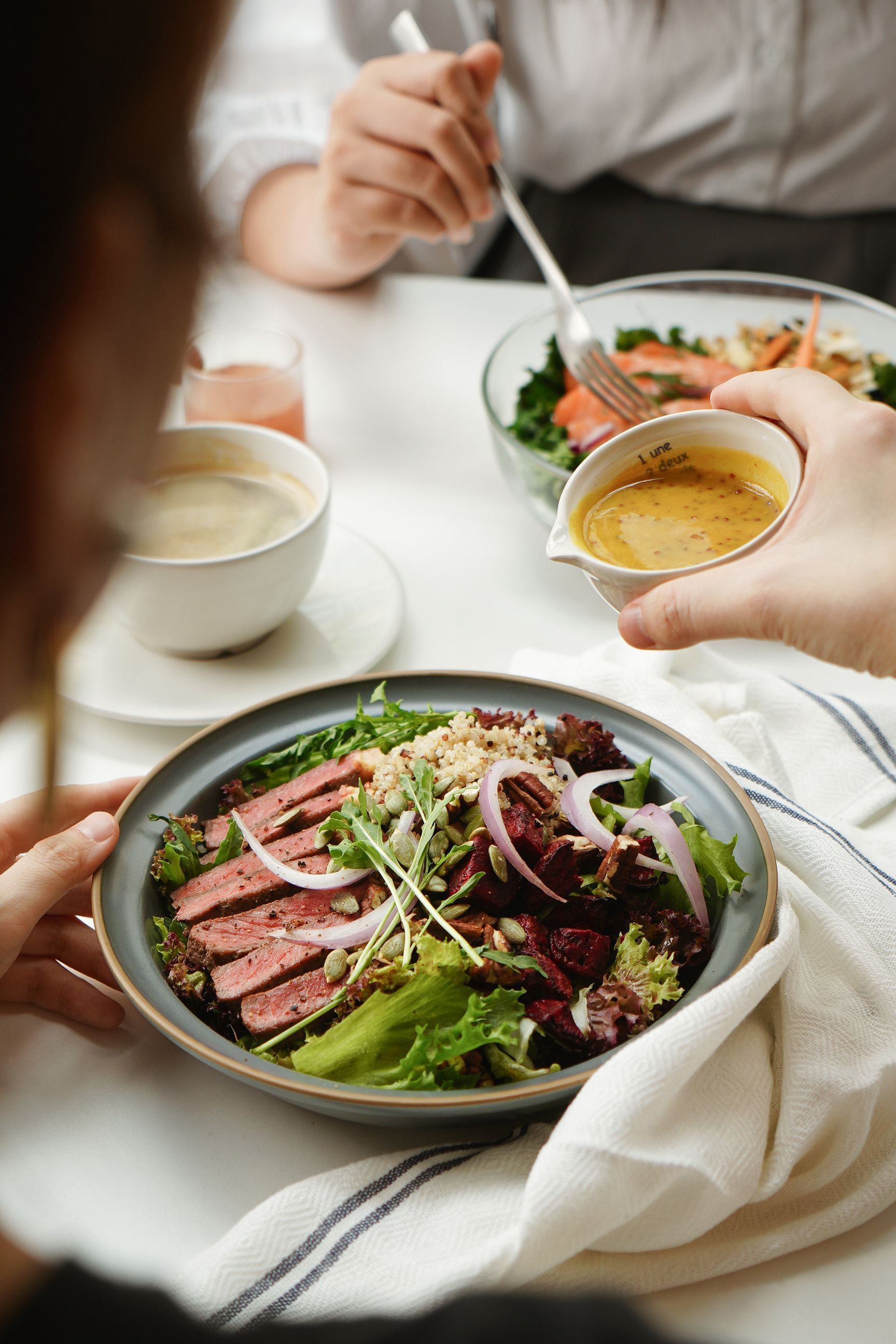
Discernment becomes especially important in a food environment where wellness itself is being marketed to us. Words such as natural, plant-based, high protein, functional, organic, or low sugar may tell us something about a product, but they do not automatically tell us whether it is nutritious.
This is where slowing down can become a form of health literacy.
- Turn the package around.
- Read the ingredient list.
- Look at what the food is primarily made from.
- Notice its fibre, protein, sugar, sodium, and fat content in relation to your overall diet.
- Ask whether the health claim on the front of the package matches what you see on the back.
There is also growing research examining diets high in ultra-processed foods. A large 2024 umbrella review published in The BMJ, which pooled findings from existing meta-analyses involving nearly 10 million participants, found that greater exposure to ultra-processed foods was associated with a range of poorer health outcomes, particularly cardiometabolic disease, common mental health outcomes, and mortality.[3]
Importantly, this research shows association, not that every processed food is inherently harmful or that eating one packaged snack damages your health.
Processing exists on a spectrum. Frozen vegetables, yogurt, bread, tofu, and canned beans are all processed in some way.
The conversation becomes more useful when we ask how frequently highly processed products are replacing more nutrient-dense foods in our everyday lives.
Discernment is not about becoming afraid of food. It is about becoming more informed about it.
Movement: The Body Was Made to Participate in Life
Movement is another foundational part of health, and it does not need to mean intense exercise.
Walking counts. Gardening counts. Dancing counts. Cycling counts. Yoga counts. Playing with your children counts. Strength training counts.
Movement can be structured or unstructured, social or solitary, vigorous or gentle.
The World Health Organization identifies regular physical activity as protective for both physical and mental health. Among adults, regular movement is associated with lower risks of cardiovascular disease, type 2 diabetes, several cancers, and premature mortality, while also supporting mood, cognition, sleep, and general well-being.[4]
There is also increasing recognition of the consequences of prolonged sedentary behaviour. Many of us live lives that require hours of sitting for work, driving, studying, or screen use, which means movement may need to be intentionally reintroduced into the day.
But movement does not have to begin with punishment. You do not need to exercise because you dislike your body. You can move because you want your body to remain capable. Because strength helps you carry groceries. Mobility helps you get onto the floor and back up. Cardiovascular fitness helps you climb stairs. Balance may help protect you as you age.
Movement becomes less about earning food or changing appearance and more about maintaining the capacity to participate fully in your own life.

Rest and Sleep Are Not Optional Extras
We often treat rest as something to earn after everything else is finished. But physiologically, rest is part of the work.
Sleep supports memory, emotional regulation, immune function, metabolic health, tissue repair, and many other biological processes. The CDC currently recommends at least seven hours of sleep per night for most adults between the ages of 18 and 60, while individual needs vary.[5]
The important conversation is not only how many hours we spend in bed, but whether we are creating the conditions that make restorative sleep possible.
Regular sleep and wake times can help. So can exposure to natural light earlier in the day, regular movement, and creating some separation between stimulation and bedtime.[6]
There will be periods in life when perfect sleep simply is not possible. New parenthood, caregiving, shift work, illness, grief, and many other realities affect our capacity to rest.
The question is not, “Am I doing sleep perfectly?”
It is, “Where is rest available to me, and how can I protect more of it?”
Compassion Does Not Mean Absolution
There is a fear that compassion toward men will somehow invalidate women's experiences. And at the same time, compassion does not mean saying: "He was hurt, therefore what he did was okay."
It means being willing to understand the full human context in which behaviour occurs.
A human can have been deeply wounded by their parents and still be responsible for how they treat their partner.
A human can have been taught to suppress emotion and still be responsible for learning emotional literacy.
A human can have experienced profound shame and still be responsible for the ways that shame becomes control, anger, withdrawal, or violence.
Understanding the wound does not remove responsibility for what someone does with it. In fact, real accountability may become more possible when we stop confusing shame with responsibility.
Shame says: "I am bad."
Responsibility says: "I did something harmful, and I need to change what I do."
Men do not need to be destroyed by shame in order to grow. And women do not need to abandon their anger in order to practice compassion.
Mindfulness: Learning to Notice Before Reacting
Health is not only shaped by what happens around us. It is also influenced by how aware we are of our experience.
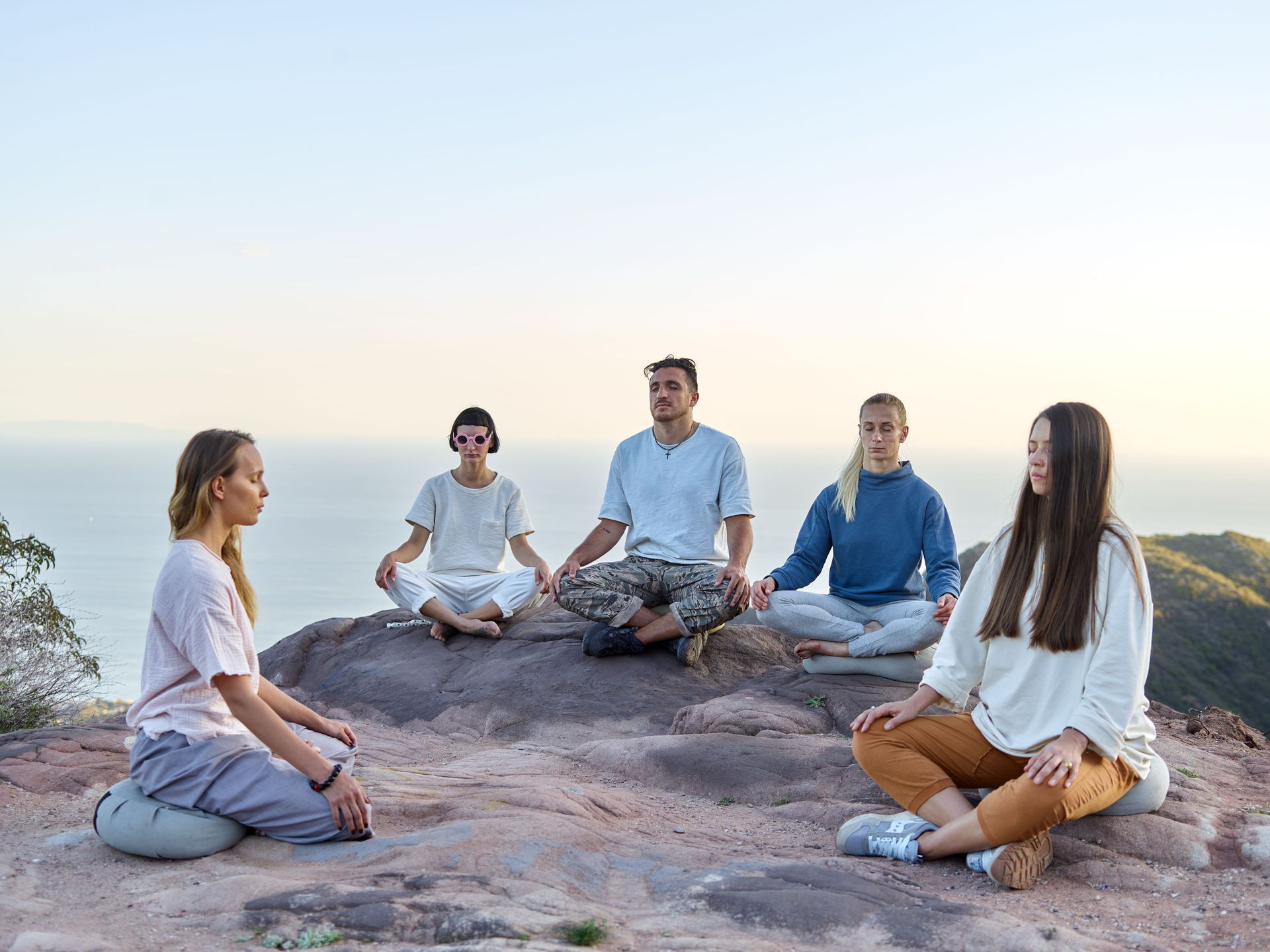
Mindfulness is the practice of intentionally bringing attention to the present moment. That can happen through formal meditation, but it can also happen while walking, breathing, eating, stretching, or simply noticing how you feel.
Research into mindfulness is still evolving, and not every claim made about meditation is supported equally. However, evidence suggests that mindfulness-based practices can support some people in managing stress, anxiety, and depressive symptoms, and may also support aspects of sleep and quality of life.[7]
Mindfulness does not require emptying the mind. It is closer to creating enough space to notice what is happening before automatically responding to it.
- Am I actually hungry?
- Am I exhausted?
- Is my body asking for movement or rest?
- Did that conversation leave me grounded or activated?
- Why did I reach for my phone again?
- What emotion is underneath this impulse?
- What happens in my body when I slow down?
This is where mindfulness and discernment begin to overlap. The more aware we become of ourselves, the more information we have available when making a choice.
Belonging Is Part of Health
One of the most overlooked pillars of holistic health is connection.
Humans are social organisms. We regulate, learn, develop, recover, and make meaning in relationship with other people.
The World Health Organization now describes social connection as an important dimension of health and has called loneliness and social isolation significant public health concerns. Its Commission on Social Connection has highlighted strong links between social connection, well-being, longevity, and both physical and mental health.[8] Similarly, the U.S. Surgeon General has reported that social isolation is associated with a significantly higher risk of premature mortality.[9]
This invites us to expand our understanding of wellness.
Health can look like sharing a meal with someone you love, calling a friend when you are struggling, joining a class, having a neighbour who knows your name, participating in a cultural or spiritual community, laughing with someone, or knowing there are people you can turn to.
This matters because modern wellness can sometimes become hyper-individualized. We are encouraged to improve ourselves, optimize ourselves, heal ourselves, and regulate ourselves. But we are not designed to do everything alone. Sometimes one of the healthiest things available to us is relationship.
Health is often presented to us as something we need to achieve. We are told to eat better, exercise more, improve our sleep, manage stress, take the right supplements, follow the right routine, and keep up with an ever-growing list of wellness practices. While many of these things can support health, the abundance of advice can also make wellness feel overwhelming, fragmented, or disconnected from the person actually living inside the body.
A more holistic approach to health asks us to widen the lens. Health is shaped not only by what we eat or how often we exercise, but also by how we sleep, how we move, how we relate to stress, the quality of our relationships, the environments we spend time in, the information we consume, and the degree to which we feel connected to ourselves and the people around us.
The World Health Organization increasingly frames self-care through this broader lens, including nutritious food, physical activity, sufficient sleep, social connection, and other supportive lifestyle practices as meaningful parts of maintaining health and well-being. [1]
The deeper invitation is not to become perfect at wellness. It is to become more aware of what we consume, create, and allow into our lives, and to develop the discernment to recognize what genuinely supports us.
What Are You Consuming, Creating and Allowing?
Food is not the only thing we consume. Every day we also take in information, social media, advertising, news, music, conversations, opinions, images, environments, and other people's ideas about how we should live.
Some of these things nourish us. Some inform or challenge us. Others may leave us anxious, distracted, inadequate, overstimulated, or increasingly disconnected from ourselves.
This does not mean avoiding anything uncomfortable. Difficult conversations and challenging information can be important.
Instead, discernment asks us to pay attention to our relationship with what we consume.
- How do I feel after spending time with this?
- Does it leave me informed or overwhelmed?
- Does it deepen my understanding or increase fear?
- Does this person encourage me to think critically, or ask me to accept everything they say?
- Does this health information help me become more connected to my body, or increasingly afraid of it?
Our environments deserve similar attention. Our homes, workplaces, communities, relationships, digital spaces, access to nature, and daily routines all influence what behaviours become easiest to repeat.
We cannot control every environment we participate in, and health should never be reduced entirely to personal responsibility. But where we do have agency, we can begin noticing what we continually allow around us and whether our surroundings support the way we want to live.
Discernment Without Fear
There is an important edge to becoming more health-conscious. Awareness can be empowering, but it can also become consuming. Wellness spaces can quickly lead us into a world where almost everything is described as toxic, inflammatory, damaging, or dangerous. In trying to become healthy, we can become increasingly afraid of food, products, technology, our environments, and even our own bodies.
Embodied discernment offers another way. Discernment asks for information without demanding purity. It recognizes that dose matters, frequency matters, context matters, individual differences matter, and the quality of evidence matters.
It also leaves room for pleasure, culture, convenience, celebration, late nights with people we love, and meals chosen simply because they taste good.
Health should expand our capacity to live, not turn life into a constant risk assessment.
When encountering a new health claim, wellness trend, product, supplement, diet, or piece of advice, consider asking:
What is actually being claimed? Who is making the claim? What evidence supports it? Is there something being sold? What are the potential benefits and trade-offs? Does this information apply to my circumstances?
And then bring the body into the conversation.
How does this affect my energy, digestion, mood, sleep, strength, relationship with food, or relationship with myself?
Our lived experience is not a substitute for credible evidence or professional healthcare. But neither should it be absent from the way we understand our health.
Embodied discernment is the meeting point between the information available to us and our capacity to notice ourselves within it.

Returning to the Foundations
When health becomes complicated, return to what is foundational. Nourish yourself with a varied and balanced diet. Move your body regularly. Protect your sleep and rest where possible. Spend time outside. Find ways to meet stress with greater awareness. Maintain relationships and participate in community. Seek appropriate preventative and medical care. Make room for pleasure.
None of these practices guarantee perfect health. They simply help create conditions in which the physical, mental, emotional, and social aspects of our wellbeing can be supported together.
The deeper we go into health, perhaps the less it needs to become about collecting more rules. Instead, it can become a practice of paying attention.
- What are you consuming?
- What are you creating?
- What are you allowing?
- What does your body keep communicating?
- What deserves another question?
And where might your health deepen not by adding something else, but by becoming more conscious of how you are already living?
Embodied discernment is not something we master. It is something we continue to practice as we learn, listen, question, and choose with greater awareness.
References
- World Health Organization. Self-care for health and well-being. 2026.
- World Health Organization. Healthy diet. WHO describes adequacy, balance, moderation, and diversity as core principles of healthy dietary patterns.
- Lane MM, Gamage E, Du S, et al. Ultra-processed food exposure and adverse health outcomes: umbrella review of epidemiological meta-analyses. BMJ. 2024;384:e077310.
- World Health Organization. Physical activity. 2024.
- Centers for Disease Control and Prevention. About Sleep. 2024.
- Centers for Disease Control and Prevention. About Sleep and Your Heart Health. 2024.
- National Center for Complementary and Integrative Health. Meditation and Mindfulness: Effectiveness and Safety.Evidence suggests potential benefits for stress, anxiety, depression, and some aspects of sleep, while noting limitations in the research.
- World Health Organization Commission on Social Connection. From loneliness to social connection: charting a path to healthier societies. 2025.
- U.S. Department of Health and Human Services, Office of the Surgeon General. Our Epidemic of Loneliness and Isolation: The Healing Effects of Social Connection and Community. 2023.
Recent Posts